Calculus can seem intimidating at first, especially when you hear words like derivatives and limits. However, understanding derivatives is much easier when you break down the concepts into simple, relatable ideas. Whether you’re a student just starting out or someone curious about how change works in math and science, grasping derivatives will open up a world of understanding about how things change and move. This guide aims to clarify what derivatives are, why they matter, and how you can learn to find them with confidence.
Derivatives measure how a quantity changes over time or space. They are fundamental in calculus, helping us understand slopes, rates, and how things evolve. Beginners can learn derivatives through simple rules, visual intuition, and practical examples to build a solid foundation for advanced math and science studies.
What Are Derivatives and Why Are They Important?
At its core, a derivative tells us how one quantity changes in relation to another. Think about a car’s speed. The speedometer shows how fast the car is going at any moment. The derivative of the car’s position with respect to time is its speed. If the position is represented by a function, the derivative indicates how quickly that position is changing.
In everyday life, derivatives help us understand movements, growth, decay, and many other phenomena. In science and engineering, derivatives are used to analyze forces, energy, and even how populations grow. They are a fundamental tool in calculus because they allow us to study change precisely.
How Derivatives Are Used in Real Life
- Physics: Calculating velocity and acceleration.
- Economics: Finding marginal cost or revenue.
- Biology: Modeling population growth.
- Engineering: Designing systems that respond to changing conditions.
Understanding derivatives opens the door to analyzing any situation involving change. They form the backbone of many scientific models and technological innovations.
How Beginners Can Approach Learning Derivatives
Starting with derivatives can feel overwhelming. But with the right steps, you can develop a clear understanding. Here’s a simple process to get you going:
- Get comfortable with functions: Know how to work with simple expressions like x squared or sine of x.
- Learn the basic rules: Familiarize yourself with the power rule, constant rule, and sum rule.
- Practice with visual intuition: Use graphs to see how functions slope at different points.
- Work through examples: Apply rules to concrete functions to see how derivatives work.
- Use study resources: Leverage tutorials, videos, and practice problems from trusted sources like Khan Academy.
Practical Steps to Find Derivatives
- Identify the function you want to differentiate.
- Choose the appropriate rule based on the function’s form.
- Apply the rule carefully, simplifying as needed.
- Check your work by graphing the original function and its derivative.
- Practice regularly to build intuition and confidence.
Basic Rules for Calculating Derivatives
For beginners, mastering a few fundamental rules makes the process straightforward. Here are the most common:
| Technique | Description | Example | Common Mistake |
|---|---|---|---|
| Power rule | Derivative of x raised to a constant power | d/dx of x^3 = 3x^2 | Forgetting to multiply by the exponent |
| Constant rule | Derivative of a constant is zero | d/dx of 5 = 0 | Overlooking constants in expressions |
| Sum rule | Derivative of sum = sum of derivatives | d/dx of (x^2 + 3x) = 2x + 3 | Confusing sum rule with product rule |
| Constant multiple rule | Derivative of a constant times a function | d/dx of 4x^2 = 4 * 2x = 8x | Failing to multiply the constant |
Applying these rules simplifies most differentiation problems. Once you’re comfortable, you can move on to more advanced rules like the product, quotient, and chain rules.
Visualizing Derivatives with Graphs
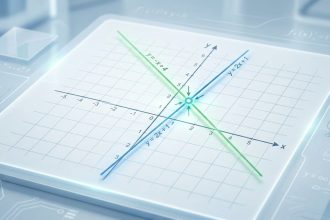
One of the most helpful ways to understand derivatives is through graphs. Imagine plotting a function like y = x squared. The slope of the tangent line at any point on the curve indicates the derivative at that point.
- When the graph slopes upward steeply, the derivative is large.
- When the graph flattens out, the derivative approaches zero.
- When the graph slopes downward, the derivative is negative.
This visual approach helps you see how derivatives describe the rate of change at every point, not just at specific moments. Many online graphing tools can assist in exploring this relationship interactively.
Common Mistakes to Watch Out For
| Mistake | Explanation | How to Avoid |
|---|---|---|
| Confusing derivative rules | Applying the wrong rule for a function | Practice identifying which rule to use |
| Forgetting to differentiate constants | Ignoring constants or coefficients | Always multiply by coefficients and constants |
| Misreading functions | Not recognizing when to use chain rule | Break complex functions into simpler parts |
| Neglecting the negative sign | Forgetting the negative when differentiating | Always check signs during calculations |
Expert tip: Always verify your derivatives by graphing both the original function and its derivative. If the slope matches your calculation, you’re likely on the right track. Practice makes perfect.
Moving Beyond the Basics
Once you’ve mastered the simple rules and visualization, you can explore more complex derivatives. These include techniques like the chain rule, which helps differentiate composite functions, and the product and quotient rules for multiplying and dividing functions.
How to Approach Advanced Differentiation
- Break down complex functions into simpler parts.
- Practice applying the chain rule step-by-step.
- Use online resources to see worked examples.
- Keep practicing to develop intuition for when and how to use each rule.
Final Tips for Mastering Derivatives
- Focus on understanding the concepts behind the rules.
- Practice with a variety of functions regularly.
- Use graphing tools to visualize derivatives.
- Don’t rush; building strong fundamentals takes time.
- Seek help from tutorials or teachers when stuck.
A Friendly Reminder to Keep Going
Learning derivatives is a journey. With patience and practice, it becomes a powerful tool in your math toolkit. Keep working through examples, visualize the concepts whenever possible, and don’t hesitate to revisit fundamental rules. As you grow more confident, you’ll see how derivatives explain the world around you in a new light.
Embracing the Power of Change in Math and Science
Derivatives may seem complex at first, but they are truly about understanding how things change. Whether you’re analyzing a moving object, a growing population, or a changing stock price, derivatives help make sense of the dynamics involved. Keep practicing and applying these concepts in real-world contexts. Over time, derivatives will become an intuitive part of your mathematical thinking, opening doors to advanced topics and exciting discoveries.