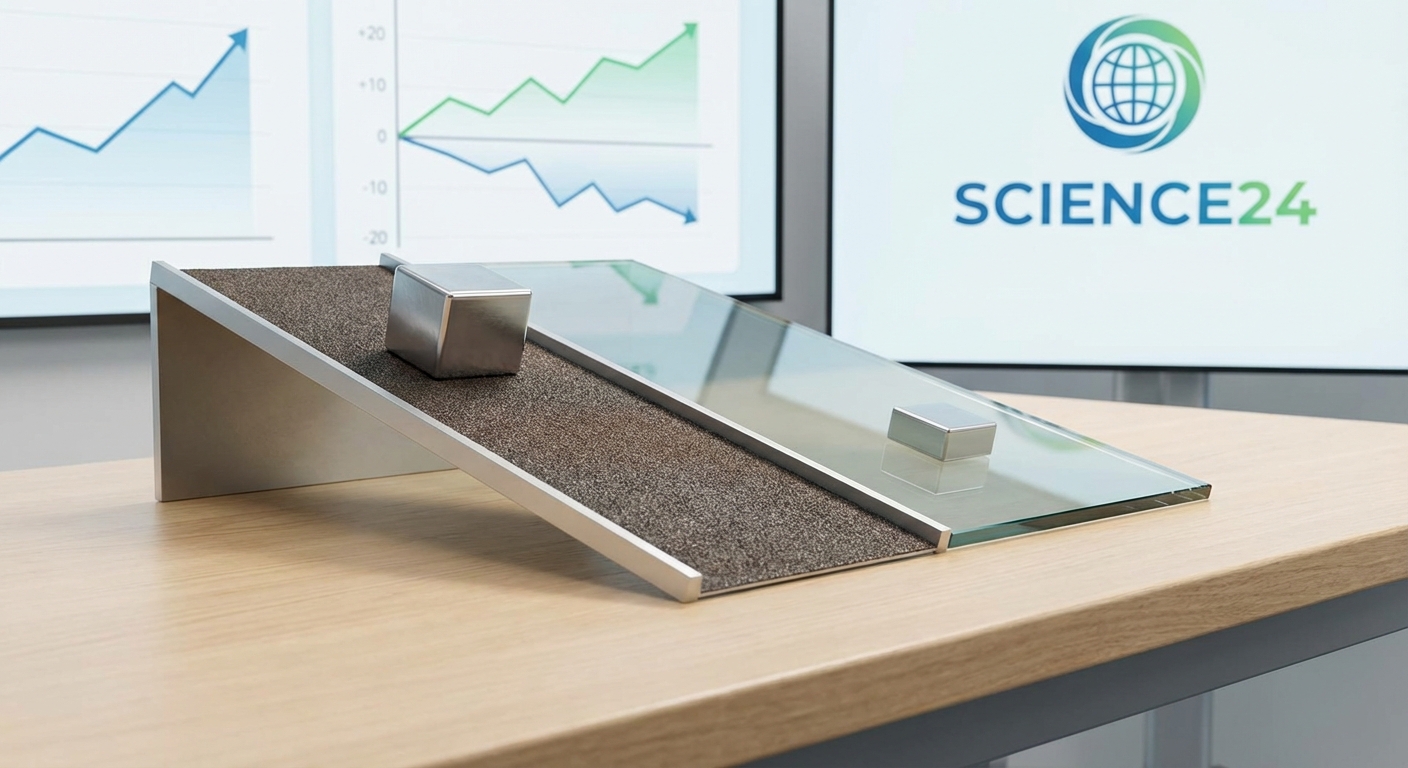
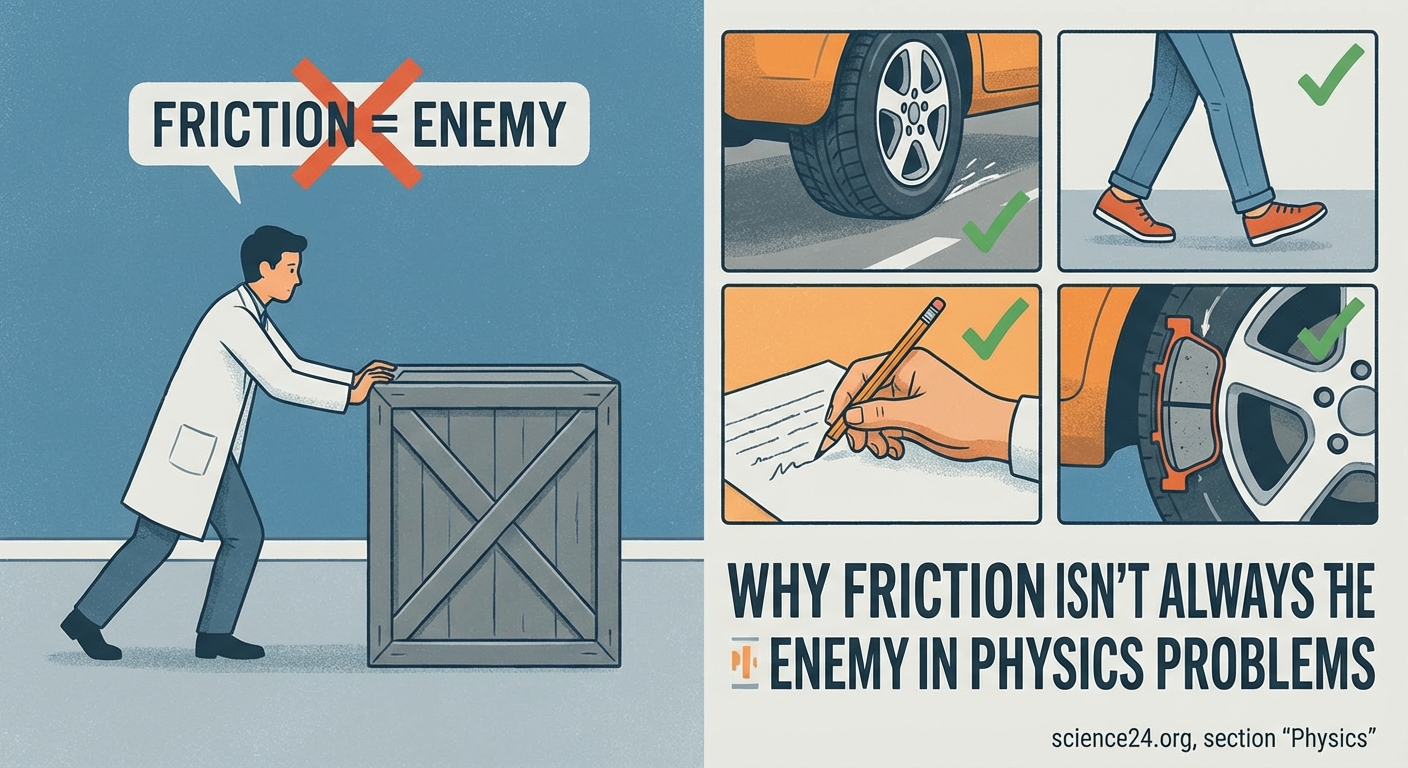
Friction gets a bad reputation in physics class. Students spend hours calculating how much energy it wastes, how it slows objects down, and how to minimize its effects. But here’s the truth: without friction, you couldn’t walk across a room, drive a car, or even hold a pencil. Understanding when friction becomes your ally rather than your obstacle transforms how you approach physics problems and real-world applications.
Friction proves essential in physics for enabling motion control, preventing slippage, generating heat, and allowing objects to remain stationary. From walking and driving to braking systems and writing instruments, friction provides the grip and resistance necessary for countless everyday activities. Recognizing when friction serves as a beneficial force helps students solve problems more effectively and understand mechanical systems better.
Walking and Running Depend Entirely on Friction
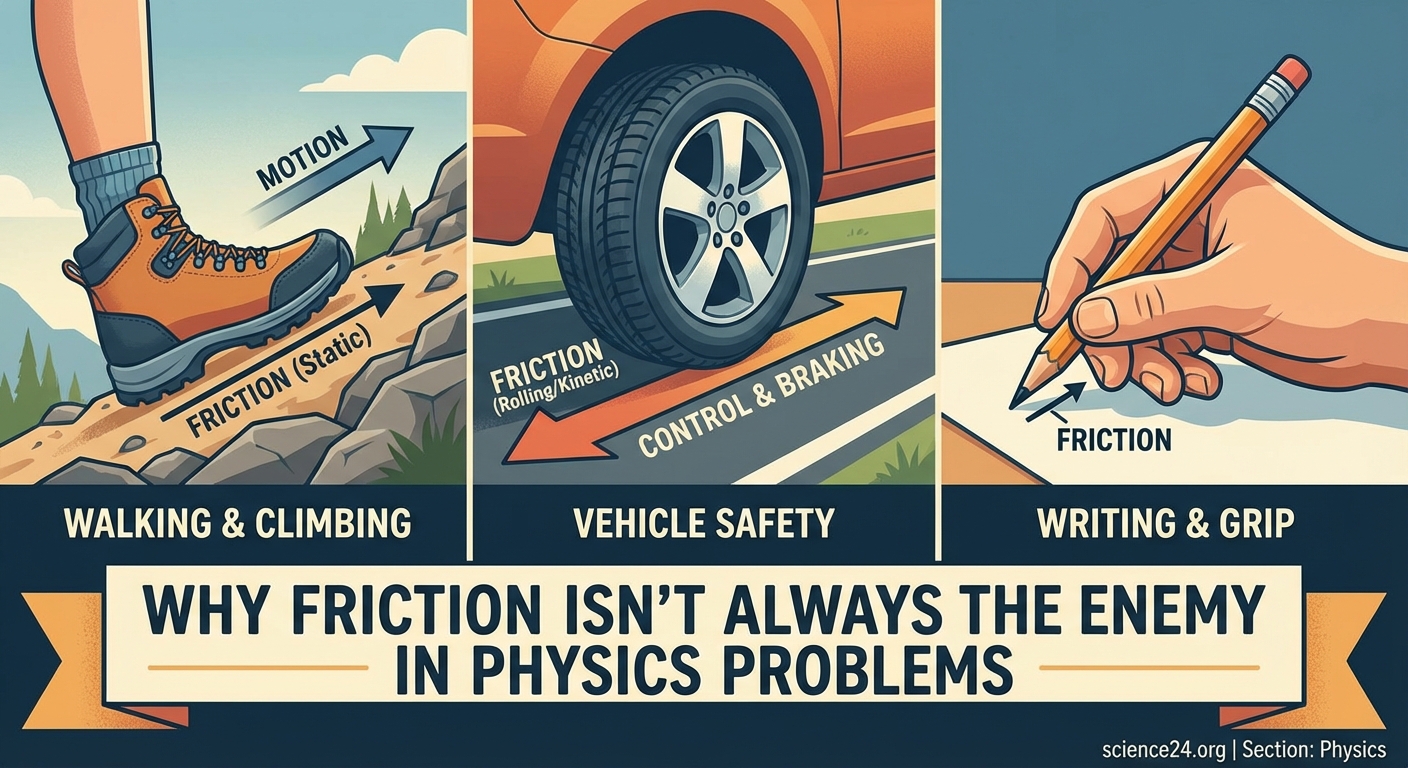
Every step you take relies on static friction between your shoes and the ground. When you push backward against the floor, friction pushes you forward. Without it, your foot would slip backward like you’re walking on ice.
The same principle applies to running. Athletes need high-friction surfaces to accelerate and change direction. Track shoes have spikes that increase the contact force and penetrate slightly into the surface, maximizing the frictional force available.
Think about what happens on a slippery surface. Your coefficient of friction drops dramatically. You can push as hard as you want, but Newton’s third law can only help you if friction provides the reaction force. The floor pushes back on you only as much as friction allows.
Vehicle Motion Requires Friction at Every Turn
Cars demonstrate when friction is useful in physics more clearly than almost any other example. Your vehicle needs friction in at least four critical ways.
First, tires grip the road through static friction. When you accelerate, the tire tries to rotate and push backward against the pavement. Friction pushes the car forward. If you’ve ever spun your wheels on ice, you’ve experienced what happens when this friction disappears.
Second, steering depends on friction between tires and road. When you turn the wheel, your front tires angle to the side. Friction provides the centripetal force needed to change direction, similar to concepts in how to calculate centripetal force in circular motion problems.
Third, braking converts kinetic energy to heat through friction. Brake pads press against rotors, creating friction that slows rotation. The stronger the friction, the faster you stop.
Fourth, the parking brake uses friction to keep your car stationary on hills. Without it, gravity would pull your vehicle downward.
| Function | Type of Friction | What Happens Without It |
|---|---|---|
| Acceleration | Static (tire to road) | Wheels spin uselessly |
| Steering | Static (tire to road) | Car slides straight ahead |
| Braking | Kinetic (pad to rotor) | Cannot slow down |
| Parking | Static (brake mechanism) | Vehicle rolls away |
Holding and Gripping Objects Needs Friction
Try picking up a glass with greasy hands. It slips right through your fingers because you’ve reduced the coefficient of friction. Your ability to hold anything depends on friction between your skin and the object’s surface.
This principle extends to every tool you use. Wrenches have textured handles to increase friction. Rock climbers use chalk to dry their hands and boost friction against the rock face. Gymnasts apply the same logic to bars and rings.
Even writing requires friction. Your pen or pencil needs to grip the paper through friction to leave a mark. The graphite in pencils actually works by friction breaking off tiny particles that stick to the paper fibers.
Static Friction Keeps Objects in Place
One of the most useful applications of friction is keeping things from moving when you don’t want them to. A book sitting on a tilted desk stays put because static friction balances the component of gravity pulling it downward along the slope.
The maximum static friction available is:
f_s ≤ μ_s N
where μ_s is the coefficient of static friction and N is the normal force. As long as the force trying to move the object stays below this maximum, friction wins and nothing moves.
This concept appears constantly in physics problems. You need to determine whether an object will slide down a ramp, whether a ladder will slip, or whether stacked boxes will topple. In each case, you’re comparing the forces trying to cause motion against the maximum static friction available.
When solving friction problems, always start by identifying whether the object is moving or stationary. Static friction adjusts to match opposing forces up to its maximum value, while kinetic friction remains constant. This distinction changes your entire approach to the problem.
Climbing and Rope Systems Use Friction for Safety
Mountain climbers trust their lives to friction. Belay devices work by creating multiple points of contact between the rope and the device, multiplying the frictional force. A small input force from the belayer can hold a much larger force from a falling climber.
The same principle appears in rope wrapped around a pole or capstan. Each wrap multiplies the holding force exponentially through friction. This is why sailors can control massive forces with relatively small effort by wrapping rope around cleats.
Friction hitches in climbing and rescue work adjust automatically. When you pull on them, they grip tighter. When you release tension, you can slide them along the rope. This self-adjusting behavior comes from the relationship between normal force and friction.
Fasteners and Connections Rely on Friction
Screws, bolts, and nails all depend on friction to stay in place. When you drive a nail into wood, the fibers compress around it, creating normal force. Friction between the nail and wood resists any force trying to pull it out.
Threaded fasteners add another layer. The threads create a mechanical advantage, but friction between the threads prevents them from unscrewing spontaneously. That’s why you need to apply torque to loosen a bolt, even though gravity or vibration might want to spin it.
Lock washers and thread-locking compounds increase friction intentionally. They prevent fasteners from loosening due to vibration or thermal cycling. Without friction, every bolt in your car or bicycle would gradually work itself loose.
Energy Dissipation Through Friction Serves Important Purposes
While physics students often calculate energy lost to friction as waste, sometimes that’s exactly what you want. Shock absorbers in vehicles use friction (along with fluid resistance) to dissipate energy from bumps and prevent bouncing.
Friction brakes on bicycles, cars, and trains all convert kinetic energy to heat intentionally. This controlled energy dissipation lets you stop safely. The alternative would be storing that energy somehow, which creates its own problems.
Even in collisions, friction plays a protective role. Crumple zones in cars use friction between deforming metal parts to absorb impact energy. This dissipation happens over a longer time period, reducing the peak force on passengers, connecting to principles in what happens to energy during elastic and inelastic collisions.
How to Identify When Friction Helps in Problem Solving
Follow these steps when analyzing whether friction is beneficial in a physics scenario:
- Determine what motion you want to happen (or prevent).
- Identify all forces acting on the object.
- Check whether friction opposes unwanted motion or enables desired motion.
- Calculate the maximum static friction available using f_s = μ_s N.
- Compare friction to other forces to determine the outcome.
This systematic approach helps you recognize friction as a tool rather than just an obstacle. In many problems, you’ll find friction is the only force preventing disaster or the key force making motion possible.
Common Situations Where Friction Becomes Essential
Recognizing patterns helps you spot when friction is useful in physics. Here are the most frequent scenarios:
- Walking, running, or any foot-powered motion
- Vehicle acceleration, steering, and braking
- Objects resting on inclined surfaces
- Holding, gripping, or grasping anything
- Rope systems and pulley arrangements
- Fasteners staying tight
- Controlled energy dissipation
- Preventing unwanted sliding or rotation
- Writing, drawing, or marking surfaces
- Musical instruments (bow on strings, fingers on frets)
Each of these situations would be impossible or dangerous without friction. When you encounter them in problems, treat friction as an essential component rather than a nuisance to minimize.
Friction in Rotational Systems
Friction doesn’t just affect linear motion. Rotating systems need friction too. Belt drives transfer power from one pulley to another through friction between the belt and pulley surfaces. If the belt slips, friction is insufficient for the torque being transmitted.
Clutches in vehicles engage and disengage power transmission through controlled friction. When you press the clutch pedal, you reduce the normal force between clutch plates, reducing friction and allowing the engine to spin independently of the transmission.
Even rolling motion involves friction. A wheel rolling without slipping relies on static friction at the contact point. This friction provides the torque needed to maintain rolling motion. If friction disappears, the wheel slides instead of rolling.
Temperature and Material Considerations
The coefficient of friction varies with temperature and materials. Rubber on dry pavement provides high friction, perfect for tires. But heat that rubber too much, and it can become slippery. Race car drivers warm their tires before competing to reach optimal friction levels.
Different material combinations give different friction coefficients. Steel on ice has very low friction, which is why ice skating works. Steel on concrete has much higher friction, which is why cars can drive on roads but slide on ice.
Understanding these variations helps you choose materials for specific applications. You want high friction between brake pads and rotors, but low friction inside engine bearings. The same force that’s beneficial in one location becomes detrimental in another.
Problem-Solving Strategy for Friction Scenarios
When tackling physics problems involving friction, use this framework:
| Step | Action | Why It Matters |
|---|---|---|
| 1 | Draw a free body diagram | Visualizes all forces including friction |
| 2 | Identify motion state | Determines static vs kinetic friction |
| 3 | Calculate normal force | Required for friction calculation |
| 4 | Find friction force | Use appropriate coefficient |
| 5 | Apply Newton’s laws | Solve for unknowns |
This structured approach prevents common mistakes like using kinetic friction for stationary objects or forgetting that static friction adjusts to match opposing forces.
Friction Makes Sound Production Possible
Many musical instruments depend on friction. Violinists draw a bow across strings, using friction to set them vibrating. The rosin applied to bow hair increases the coefficient of friction, improving the bow’s grip on the string.
Percussion instruments like drums use friction between the drumstick and head to transfer energy. Even wind instruments have friction between moving air and the instrument walls, though this is usually a smaller effect.
Your vocal cords produce sound through controlled friction as air passes between them. The tension and position of the cords determine the pitch, but friction makes the vibration possible.
Sports and Recreation Need Friction
Athletes manipulate friction constantly. Basketball players wear shoes with soft rubber soles that deform slightly, increasing contact area and friction. This lets them start, stop, and change direction rapidly.
Baseball pitchers use friction between their fingers and the ball to impart spin. Different grips create different friction patterns, producing curves, sliders, and other pitches.
Swimmers reduce friction in water with streamlined positions and special suits, but they need friction between their hands and the water to pull themselves forward. The same force that slows them down also propels them.
Manufacturing and Machining Applications
Industrial processes use friction in sophisticated ways. Friction welding joins metals by rubbing them together until friction generates enough heat to fuse them. This creates strong bonds without external heat sources.
Grinding and polishing rely on friction between abrasive particles and the workpiece. Controlled friction removes material precisely, creating smooth surfaces or sharp edges.
Conveyor belts move products through factories using friction. The belt grips items through friction, carrying them from station to station. Too little friction and products slip; too much and the belt motor strains.
Why Friction Deserves Respect in Physics
Friction isn’t the enemy. It’s the force that makes controlled motion possible. Without it, you couldn’t walk, drive, write, or hold anything. Every machine would need completely different designs. Life as we know it would be impossible.
When you approach physics problems, look for friction’s beneficial roles. Ask yourself what would happen if friction suddenly vanished. Usually, the answer reveals just how useful friction really is. This perspective shift makes you a better problem solver and helps you understand the physical world more deeply. Next time you tackle a mechanics problem, consider whether friction might be the hero rather than the villain.
Leave a Reply