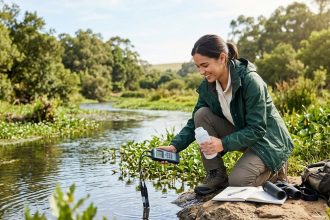
Research scientists have a reputation for working on groundbreaking projects, but what does their day really look like? Their daily routines are a mix of curiosity, methodical experiments, collaboration, and continuous learning. Whether they are in a laboratory, analyzing data, or writing reports, research scientists play a vital role in advancing our understanding of the world. This article sheds light on the typical day in the life of a research scientist, helping students and aspiring scientists understand what to expect when pursuing this exciting career.
Research scientists dedicate their days to conducting experiments, analyzing results, collaborating with peers, and continually updating their knowledge. Their work involves a mix of hands-on laboratory tasks and detailed documentation, all driven by curiosity and a desire to solve complex problems. Understanding their routine offers valuable insights for students aiming to enter STEM fields and contribute to scientific discovery.
What Do Research Scientists Do Every Day?
Research scientists are problem solvers. Their work revolves around investigating questions, testing hypotheses, and discovering new knowledge. A typical day often includes a combination of experiments, data analysis, meetings, and writing. The specific activities can vary depending on their field—biology, chemistry, physics, environmental science, or other STEM areas. However, the core elements remain similar across disciplines.
Typical Daily Activities of a Research Scientist
1. Starting the Day with Planning and Review
Most research scientists begin their day by reviewing previous results and planning their tasks. They might check emails for collaboration updates or new data. They often look over their research protocols or experiment designs. This planning helps them stay organized and sets clear goals for the day.
2. Conducting Experiments and Data Collection
A significant part of their day involves hands-on work in laboratories or field sites. They prepare reagents, set up equipment, and run experiments. For instance, a biologist might culture cells, while a chemist could synthesize compounds. Attention to detail ensures experiments are accurate and reproducible.
3. Analyzing Data and Interpreting Results
Once experiments are complete, scientists analyze the data collected. This might involve using software tools for statistical analysis, graphing results, or interpreting patterns. They look for meaningful insights and check if the data supports their hypotheses.
4. Collaborating with Colleagues and Attending Meetings
Research is rarely a solo effort. Scientists meet with colleagues to discuss findings, troubleshoot problems, or plan future experiments. Collaboration can include interdisciplinary teams, sharing insights and resources. Regular meetings foster a community of learning and innovation.
5. Documenting and Reporting Findings
Accurate documentation is essential. Scientists write detailed lab notes, prepare reports, or draft scientific papers. Clear records ensure experiments can be replicated and findings validated. For publication, they prepare manuscripts to share their discoveries with the scientific community.
6. Continuing Education and Staying Updated
Research scientists dedicate time to learning. They read scientific journals, attend seminars, or participate in webinars. Staying current with the latest discoveries and techniques is vital for maintaining relevance and advancing their projects.
7. Troubleshooting and Problem Solving
Experiments often encounter unexpected challenges. Scientists analyze what went wrong, adjust protocols, or test new approaches. Flexibility and critical thinking are key skills during these moments.
8. Administrative Tasks and Grant Applications
Many scientists spend part of their day applying for research funding or managing project budgets. Writing grant proposals, submitting progress reports, and managing schedules are common administrative duties.
Skills Every Research Scientist Uses Daily
- Analytical thinking: to interpret complex data.
- Attention to detail: to ensure experiments are accurate.
- Communication: to share findings clearly.
- Problem-solving: to troubleshoot issues.
- Time management: to balance experiments, meetings, and writing.
- Collaboration: to work effectively with teams.
Techniques and Mistakes in Scientific Research
| Technique | Common Mistake | Tip for Success |
|---|---|---|
| Careful experiment design | Rushing protocols | Plan experiments meticulously before starting |
| Accurate data recording | Skipping steps | Maintain detailed lab notes for reproducibility |
| Using proper controls | Ignoring controls | Always include controls to validate results |
| Data analysis with statistical tools | Misinterpretation of data | Learn basic statistics and software skills |
| Peer review and collaboration | Withholding data | Share findings openly for validation |
“The key to successful research is patience and meticulous attention to detail. Rushing through experiments often leads to errors that can compromise entire projects,” advises Dr. Jane Smith, a veteran research scientist.
A Day in the Life: Breaking Down the Routine
Research scientists typically follow a flexible schedule. Some mornings might begin with experiments, while afternoons focus on analysis or meetings. The work can extend beyond regular hours, especially when experiments require long incubation times or data processing. Flexibility is a vital trait in this career.
Practical Processes in Daily Research Work
- Design or refine experiments based on existing knowledge.
- Set up and run experiments carefully, following protocols.
- Collect and analyze data, using appropriate tools.
- Collaborate with team members to interpret findings.
- Document all procedures and results thoroughly.
- Write reports or papers to share discoveries.
- Review latest research to stay current.
- Attend meetings to discuss progress and challenges.
- Apply for funding or manage ongoing projects.
Scanning List of Daily Tasks
- Preparing laboratory materials
- Running experiments
- Monitoring experiments
- Data entry and analysis
- Writing reports or publications
- Attending team meetings
- Reading scientific literature
- Planning future experiments
- Troubleshooting technical issues
Common Challenges and How to Overcome Them
Research can be unpredictable. Experiments may fail, or data might be inconclusive. Developing resilience and troubleshooting skills is essential. Learning from mistakes and continuously updating techniques improve success rates.
| Technique | Mistake | How to Improve |
|---|---|---|
| Experimental design | Not considering all variables | Review literature thoroughly before designing experiments |
| Data analysis | Ignoring outliers | Use statistical methods to identify and handle anomalies |
| Communication | Failing to share findings | Present results clearly in meetings and reports |
Final Thoughts on the Life of a Research Scientist
Understanding what research scientists do daily offers a glimpse into a world driven by curiosity and persistence. Their work is a mix of meticulous experimentation, analysis, collaboration, and ongoing learning. For students interested in science, knowing these routines can inspire them to develop the skills needed for a successful career in research.
Keep the curiosity alive and pursue your passion for discovery
A career in research science is rewarding for those who love solving puzzles and making new discoveries. Whether in a university, government lab, or private industry, the routine may vary, but the core motivation remains the same. Embrace the challenge, sharpen your skills, and keep asking questions. Your next big breakthrough might be just a experiment away.