Your stomach growls. You feel a knot tighten before a big presentation. Or maybe you notice that after a rich meal, your mood seems to lift. This isn’t just coincidence. The trillions of bacteria living in your digestive system are constantly talking to your brain, and scientists now know that the conversation goes both ways. By 2026, research has made it crystal clear: the composition of your gut microbiome can directly influence how happy, anxious, or irritable you feel. The connection between gut bacteria and mood is no longer a fringe idea. It’s a cornerstone of modern neuroscience and gastroenterology.
Your gut microbiome produces neurotransmitters like serotonin and dopamine that regulate mood. An imbalance in gut bacteria can lead to inflammation, which affects brain function and contributes to anxiety and depression. Simple dietary changes, probiotics, and stress management can positively reshape your gut ecosystem and improve emotional well-being.
The Gut-Brain Axis: A Two-Way Street
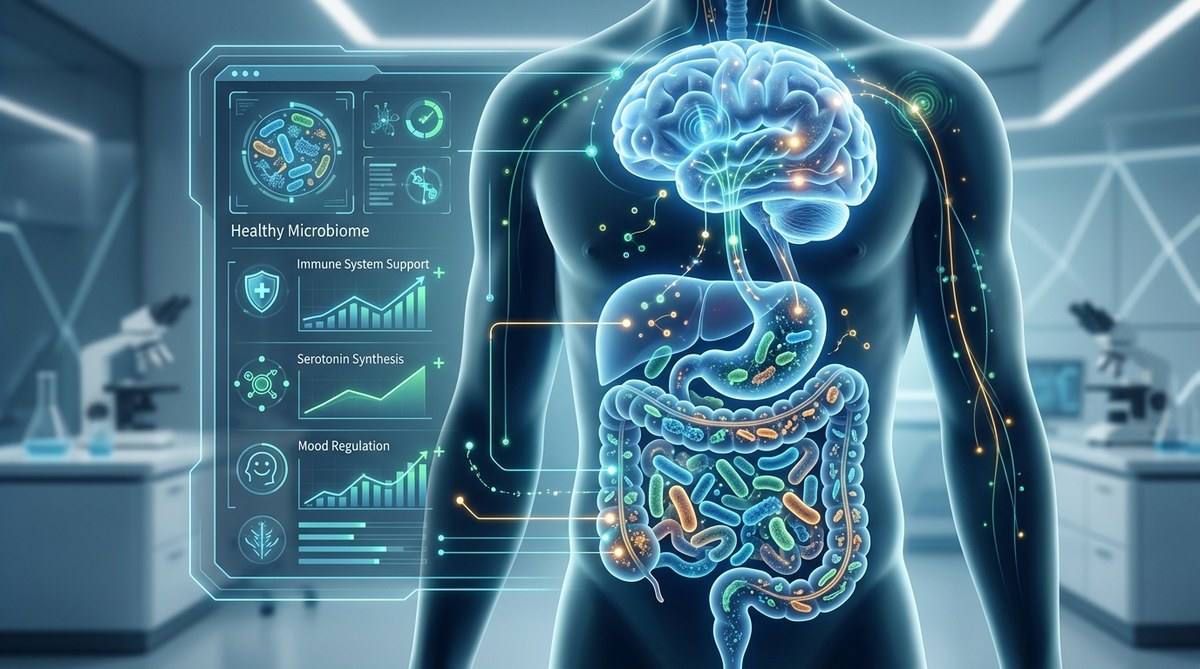
The link between your digestive tract and your brain is called the gut-brain axis. This isn’t a single nerve or a simple pathway. It’s a complex network of neural, hormonal, and immune signals. The vagus nerve runs directly from your brainstem to your abdomen, carrying messages in both directions. About 90% of the signals travel upward from gut to brain, not the other way around. That means what’s happening in your intestines can change how you feel upstairs.
Your gut lining hosts a dense community of microbes: bacteria, fungi, viruses, and other microorganisms. Together, they form the microbiome. When the microbiome is diverse and balanced, it helps you digest food, produce vitamins, and keep inflammation low. When it’s thrown off, problems can arise. And those problems don’t stay in your stomach. They ripple up to your mood.
How Gut Bacteria Produce Mood-Altering Chemicals
Your gut bacteria are tiny chemical factories. They can synthesize many of the same neurotransmitters your brain uses. Here are a few key examples:
- Serotonin: About 90% of your body’s serotonin is made in the gut. This chemical helps regulate mood, sleep, and appetite. Certain bacteria, like Lactobacillus and Bifidobacterium, stimulate the cells that produce it.
- Dopamine: Known for its role in reward and motivation. Some gut bacteria can produce dopamine precursors or influence dopamine signaling.
- Gamma-aminobutyric acid (GABA): This is your brain’s main inhibitory neurotransmitter. It helps calm you down. Certain Lactobacillus strains can produce GABA directly.
When your microbiome is out of balance, production of these chemicals can drop. That can leave you feeling low, anxious, or less resilient.
Inflammation: The Hidden Link Between Gut Health and Depression
One of the most well-supported mechanisms connecting gut bacteria and mood is inflammation. When harmful bacteria overgrow or the gut lining becomes “leaky,” fragments of bacteria can enter your bloodstream. Your immune system responds with inflammation. Chronic low-grade inflammation has been strongly linked to depression and anxiety.
A 2025 meta-analysis in Nature Mental Health found that people with major depressive disorder had significantly lower levels of Faecalibacterium and Coprococcus, two anti-inflammatory bacteria. Meanwhile, they had higher levels of pro-inflammatory strains like Eggerthella. The inflammation they cause can affect brain areas that regulate emotion.
“The gut microbiome is a key modulator of the immune system, and inflammation driven by dysbiosis may be one of the primary drivers of mood disorders,” says Dr. Jessica Chen, a microbiome researcher at Stanford University. “We’re now seeing that targeting the gut with dietary interventions can be as effective as some antidepressants in certain populations.”
Signs Your Gut Bacteria Might Be Affecting Your Mood
How do you know if your microbiome is working for you or against you? Look for these common signs:
| Symptom | Possible Gut Connection |
|---|---|
| Persistent anxiety or low mood | Low serotonin production; inflammation |
| Bloating or indigestion after eating | Imbalanced gut flora; poor fermentation |
| Sugar cravings | Overgrowth of sugar-loving bacteria |
| Brain fog | Metabolites from dysbiosis affecting cognition |
| Poor sleep | Disrupted melatonin and serotonin cycles |
If you have several of these, your gut bacteria and mood may be entangled.
Numbered Steps: How to Support a Healthier Gut for a Better Mood
- Feed the good bacteria with fiber. Soluble fiber found in oats, beans, apples, and carrots promotes the growth of beneficial Bifidobacterium and Lactobacillus. Aim for 30 grams of fiber daily.
- Eat fermented foods regularly. Yogurt, kefir, sauerkraut, kimchi, and miso introduce live cultures that can help restore balance. A 2021 study from Stanford showed that a diet rich in fermented foods increased microbiome diversity and reduced inflammatory markers.
- Cut back on ultra-processed foods. Sugary snacks, artificial sweeteners, and emulsifiers can harm beneficial bacteria. They feed harmful strains and increase gut permeability.
- Manage stress through mindfulness or exercise. Chronic stress alters the microbiome via cortisol. Even 20 minutes of walking can help. The vagus nerve responds positively to breathing exercises.
- Consider a targeted probiotic supplement. Not all probiotics are the same. Look for strains with clinical evidence for mood, such as Lactobacillus helveticus R0052 and Bifidobacterium longum R0175. Consult your doctor first.
Bulleted List: Common Mistakes People Make
- Taking the wrong probiotic strain. Many over-the-counter probiotics contain generic strains that don’t survive stomach acid or don’t target mood.
- Expecting overnight results. The microbiome takes weeks to months to shift. Consistency matters.
- Relying only on supplements. Diet is the foundation. Supplements can help but won’t fix a poor diet.
- Ignoring antibiotic effects. A single course of antibiotics can wipe out beneficial bacteria. Always pair antibiotic use with probiotics and fiber.
- Avoiding all carbs. Complex carbs are essential for feeding good bacteria. Low-carb diets can starve them.
The Science Behind the Hype: What 2026 Research Confirms
We now have robust human trials, not just mouse studies. A 2025 randomized controlled trial published in Psychiatry Research gave participants with moderate depression a daily fermented milk drink containing specific probiotic strains. After eight weeks, they showed a 40% greater reduction in depression scores compared to placebo. Brain scans revealed changes in areas linked to emotional processing.
Another 2026 study from University of California, Los Angeles tracked microbiome samples from 200 participants over two years. People with the most stable, diverse microbiomes reported 50% fewer episodes of anxiety. The researchers could predict mood changes based on shifts in bacterial populations weeks in advance.
The picture is clear: your gut bacteria and mood are not separate. They are part of one system.
Practical Strategies for Long-Term Change
You don’t need to overhaul your life overnight. Start with one small change. Add a serving of fermented food each day. Walk for ten minutes after meals. Prioritize seven to eight hours of sleep. Gradually, your gut will respond, and your mood will follow.
Remember that everyone’s microbiome is unique. What works for your friend may not work for you. Keep a food and mood journal for two weeks to notice patterns. If you have persistent symptoms, consider working with a gastroenterologist or a dietitian who understands the microbiome.
How Your Gut Flora Shapes Emotional Resilience
The research points to a simple truth. A healthy gut creates a stable foundation for emotional health. It buffers the impact of stress. It supplies the raw materials your brain needs to stay balanced. By caring for your gut bacteria and mood connection, you are giving yourself a powerful tool for mental well-being. Start today, and your future self will thank you.