Imagine trying to push a heavy boulder up a steep hill. It takes a huge effort, and you might not make it. Now imagine someone builds a gentle ramp that lets you roll that same boulder up with much less sweat. That ramp is what a catalyst does for a chemical reaction. It does not push the boulder itself, and it does not disappear when the job is done. It simply makes the uphill journey easier and faster.
A catalyst speeds up a chemical reaction by lowering the activation energy required to get the reaction started. It provides an alternative pathway with a smaller energy hump. The catalyst is not consumed in the process, so it can be used over and over again. This simple principle powers everything from car exhaust converters to the enzymes in your own cells.
What Exactly Is a Catalyst?
A catalyst is a substance that increases the rate of a chemical reaction without being permanently changed or used up. You can think of it as a helper that gets the reaction going faster. When the reaction is over, the catalyst is still there, ready to help the next batch of reactants.
Because the catalyst is not consumed, only a small amount is often needed to speed up a large quantity of reactants. This makes catalysts incredibly efficient. They are widely used in industry to save energy, time, and money.
The key idea is that catalysts do not change the final products of a reaction. They also do not change the overall energy released or absorbed. They only change the speed at which the reaction happens.
The Activation Energy Barrier
Every chemical reaction needs a certain amount of initial energy to get started. Chemists call this the activation energy. You can picture it as a hill. Reactants start at the bottom. To turn into products, they must climb over the hill. The higher the hill, the slower the reaction.
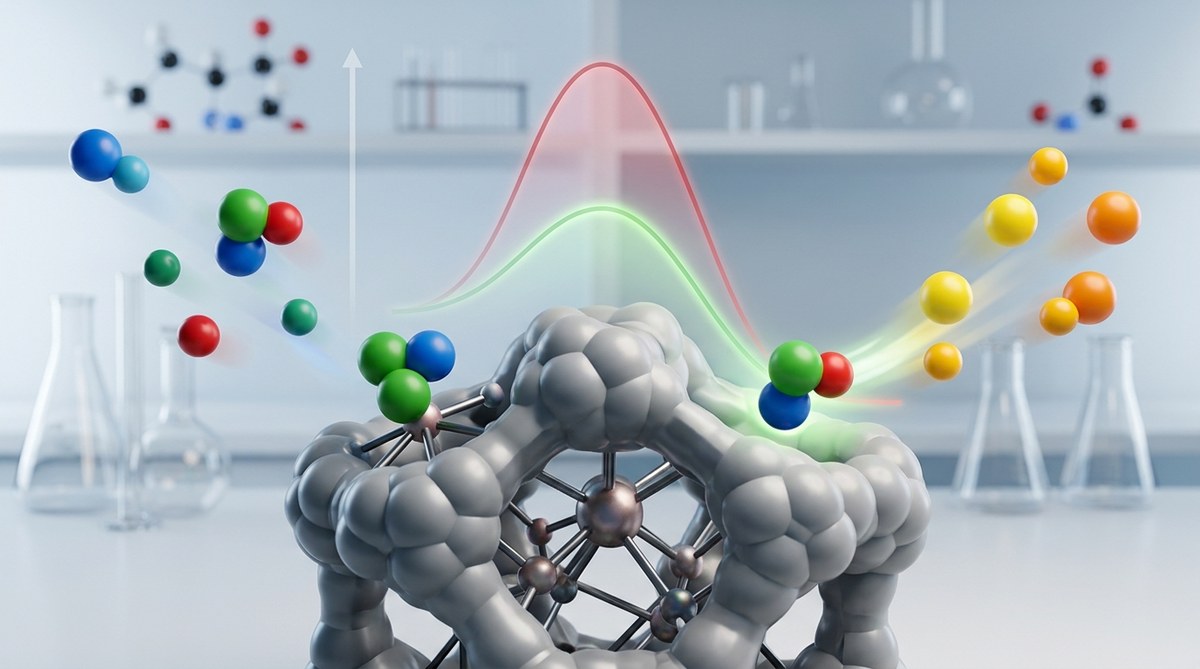
Without a catalyst, the hill is steep. Only molecules with enough energy can make it over. With a catalyst, a new path is created that has a much lower hill. More molecules can get over the hill at any given moment, so the reaction speeds up.
It is important to note that catalysts do not lower the energy of the reactants or products. They lower only the activation energy barrier. This reduction is what answers the question of how do catalysts speed up chemical reactions.
How Catalysts Lower the Activation Energy
Catalysts work in several creative ways. The mechanism depends on the type of catalyst and the reaction, but the goal is always the same: lower that energy hill.
Alternative Reaction Pathway
The most common method is offering a completely different route for the reaction. Imagine a mountain pass that goes through a tunnel instead of over the peak. That tunnel is the catalyst. It provides a sequence of steps that require less energy to complete. Each step has its own small activation energy, but the total energy needed to get from start to finish is much lower than the original single step.
Bringing Reactants Closer Together
Some catalysts physically hold reactant molecules in the right position. When molecules bump into each other randomly, they often miss or collide at the wrong angle. A catalyst can lock reactants in place, orienting them so that the reactive parts are positioned just right. This increases the chance of a successful collision and speeds up the reaction.
Providing a Surface for Reactions
Solid catalysts often work by providing a large surface area where reactant molecules can stick (adsorb). The surface holds the molecules close together and weakens their internal bonds. This makes it easier for bonds to break and new bonds to form. After the reaction, the product molecules leave the surface, freeing up space for the next batch.
Homogeneous vs Heterogeneous Catalysts
Catalysts come in two main flavors. Homogeneous catalysts are in the same phase as the reactants (usually all dissolved in a liquid). Heterogeneous catalysts are in a different phase, typically a solid helping gas or liquid reactants. Your car’s catalytic converter uses a solid catalyst (platinum and palladium) to speed up reactions in the exhaust gas. That is a classic heterogeneous catalyst.
Catalysts in Everyday Life: Real-World Examples
You encounter catalysts more often than you might realize. They are not just lab curiosities. They are workhorses in chemistry and biology. Here are a few common catalysts in action:
- Enzymes: These are the biological catalysts inside your body. They speed up digestion, energy production, and DNA replication. Without enzymes, the chemical reactions that keep you alive would take years. To learn more, check out our article on what makes enzymes such powerful biological catalysts.
- Catalytic Converters: Your car’s exhaust system uses platinum, palladium, and rhodium. These metals convert toxic gases like carbon monoxide and nitrogen oxides into less harmful substances like carbon dioxide and nitrogen. They do this without being used up, lasting for many thousands of miles.
- The Haber Process: This industrial method produces ammonia for fertilizer. It uses an iron catalyst and high pressure to combine nitrogen and hydrogen. Without the catalyst, the reaction would be too slow to be practical. This process has helped feed billions of people.
- Catalysts in Manufacturing: Many plastics, medicines, and fuels are made using catalysts. For example, the creation of polyethylene (used in shopping bags) requires a catalyst. These chemicals are essential in the role of chemical reactions in everyday life.
3 Key Ways Catalysts Speed Up Reactions
Let us break down the three main actions a catalyst takes. This numbered list summarizes the core ideas.
- Lower the activation energy: The catalyst provides a new path with a smaller energy hill. This allows more molecules to react at a given temperature, so the rate increases.
- Orient and stabilize reactants: By holding molecules in the right position or stabilizing an intermediate state, the catalyst makes it easier for bonds to break and form. This reduces the energy needed for successful collisions.
- Provide an active surface: Solid catalysts use surface sites to adsorb reactants, weaken bonds, and release products. This surface action increases the frequency of effective collisions.
Common Misconceptions and Mistakes
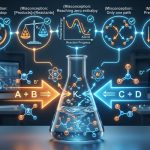
Students often get a few things wrong about catalysts. Here is a table that clears up the most frequent errors. This kind of mistake can also cost you points on exams, so we have a guide on common chemistry mistakes that cost you points on AP exams that you may find helpful.
| Misconception | Truth |
|---|---|
| Catalysts are consumed in the reaction. | Catalysts are chemically unchanged at the end. They are regenerated and can be reused. |
| Catalysts make reactions that would not happen otherwise. | Catalysts only speed up reactions that are already thermodynamically possible. They do not change the equilibrium. |
| Catalysts increase the yield of a reaction. | Catalysts do not change the amount of product at equilibrium. They only help you reach equilibrium faster. |
| All catalysts work the same way. | Catalysts use different mechanisms: surface adsorption, orientation, intermediate stabilization, etc. |
| A catalyst only works at high temperatures. | Many catalysts, especially enzymes, work best at mild temperatures and can be destroyed by heat. |
“A catalyst is a substance that speeds up a chemical reaction without being consumed. It lowers the activation energy by providing an alternative reaction pathway. This is one of the most elegant and efficient concepts in chemistry. Once you understand it, you see catalysis everywhere.” – Adapted from a standard college chemistry textbook.
The Limitless Potential of Catalysis
Catalysts are not just a textbook concept. They are a fundamental tool that scientists and engineers use to make reactions faster, cheaper, and cleaner. The same principle explains why your car burns fuel more efficiently, why your body digests food, and why industries can produce fertilizers to feed the world.
Understanding how do catalysts speed up chemical reactions gives you a powerful lens to see the invisible helpers all around you. The next time you breathe, digest a meal, or start your car, remember that a catalyst is quietly working to make it happen faster. And because catalysts are never used up, they keep helping again and again like a loyal friend who offers a shortcut every time. So go ahead, share this understanding with a friend, or apply it to your own study of chemistry. The science of catalysis is open to everyone, and now you know the simple secret.