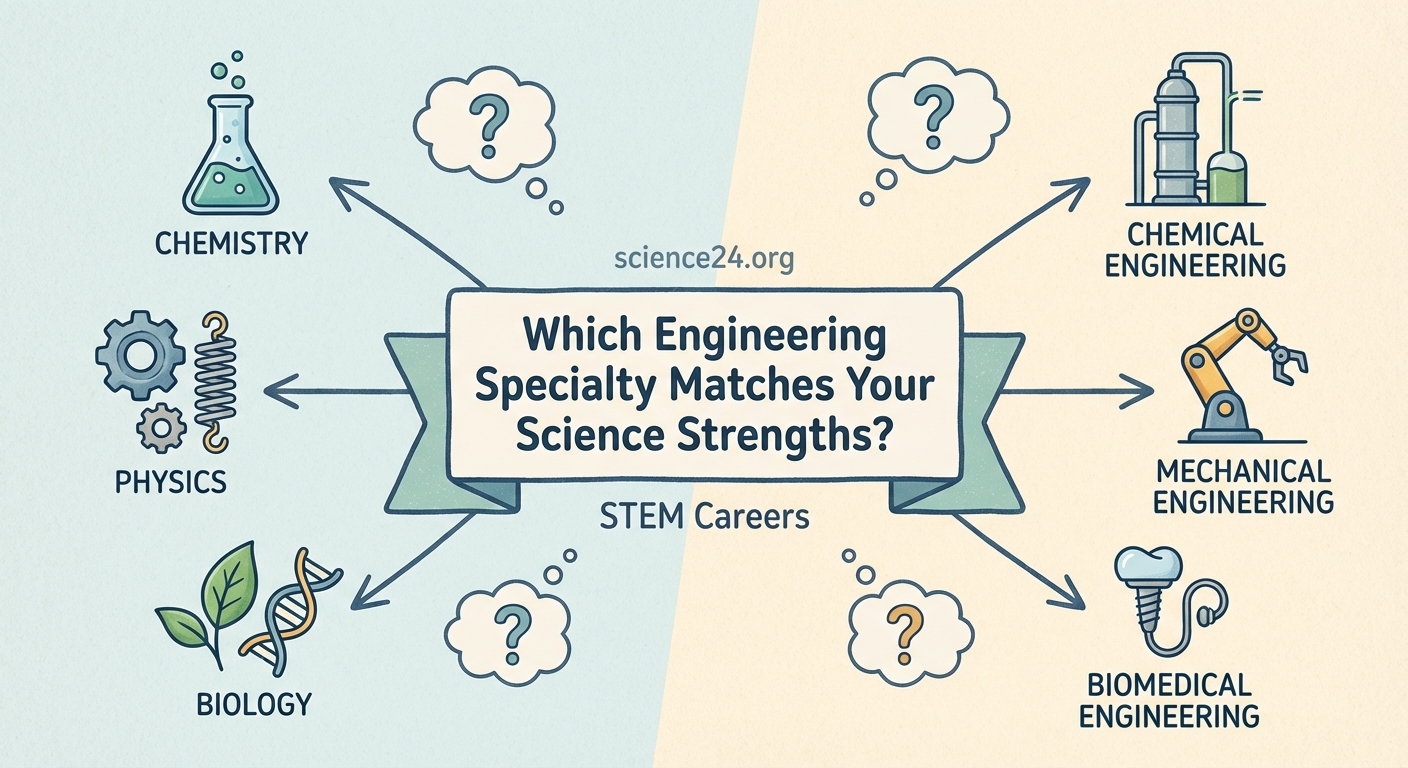
Choosing an engineering major feels overwhelming when you’re staring at a list of fifteen different specializations. You know you like science and math, but how do you figure out which engineering specialization is right for me when they all seem to blend together?
The good news is that your current academic strengths already point toward specific engineering paths. Your favorite science class isn’t random. It reveals how your brain naturally solves problems.
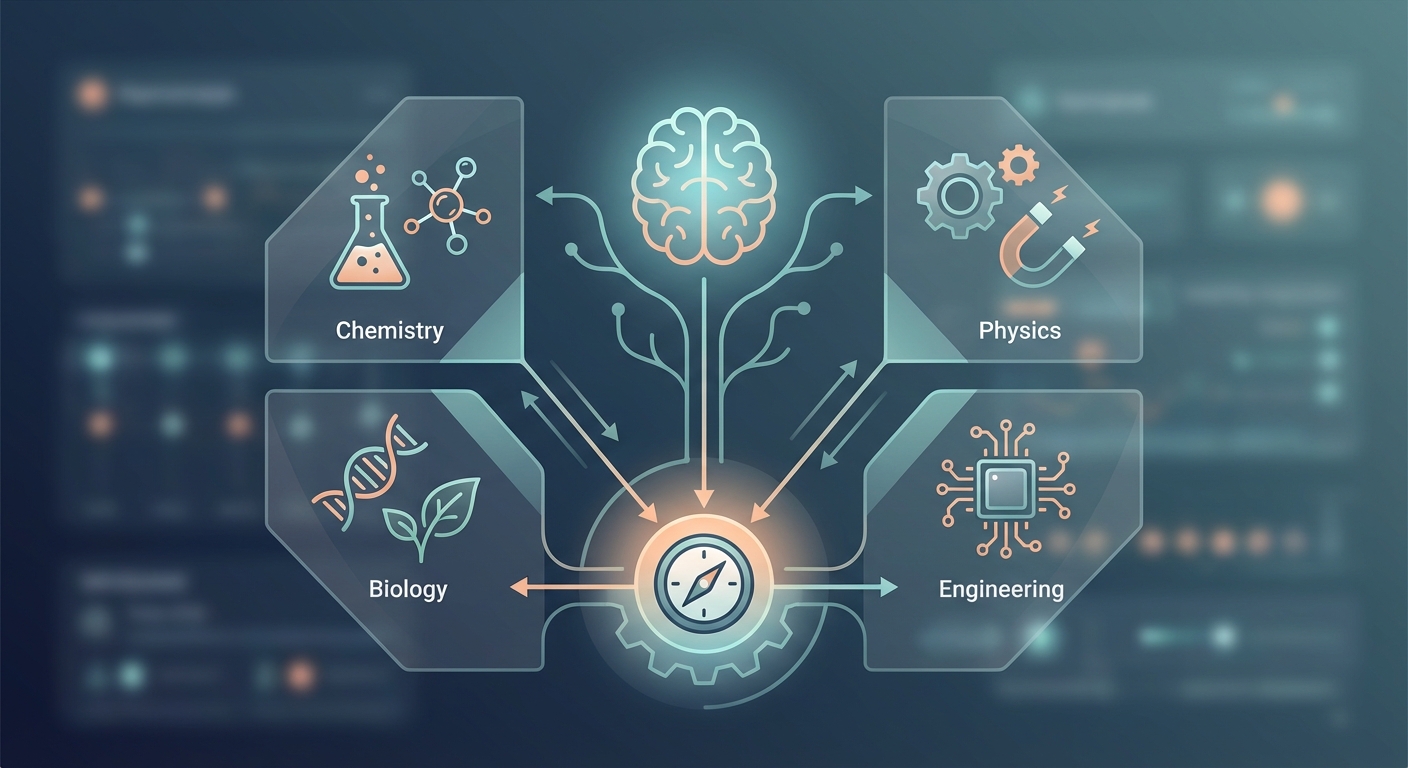
Your strongest science subjects predict which engineering specialization fits best. Physics lovers thrive in mechanical or aerospace engineering. Chemistry enthusiasts excel in chemical or materials engineering. Biology students succeed in biomedical engineering. Math-focused students gravitate toward electrical, computer, or industrial engineering. Match your natural academic strengths to engineering disciplines that build on those foundations.
How Your Science Strengths Map to Engineering Fields
Different engineering majors rely on different scientific foundations. Some programs live in physics labs. Others spend more time with chemical reactions or biological systems.
Understanding this connection helps you skip years of switching majors.
Physics-Based Engineering Specializations
If you genuinely enjoy physics problems, several engineering paths build directly on those skills.
Mechanical engineering uses concepts like Newton’s laws constantly. You’ll analyze forces, design moving parts, and calculate energy transfers during collisions.
Aerospace engineering takes mechanical principles into flight and space. Students who love projectile motion problems often find this field natural.
Civil engineering applies physics to structures, roads, and water systems. You’ll use statics, dynamics, and fluid mechanics daily.
Electrical engineering requires strong physics understanding, especially electromagnetic induction and circuit behavior.
“Students who can visualize forces and motion without struggling usually thrive in mechanical or aerospace programs. If physics feels like solving puzzles rather than memorizing formulas, you’re already ahead.”
Chemistry-Focused Engineering Paths
Chemistry lovers have clear engineering options that use those skills every day.
Chemical engineering transforms raw materials into products. You’ll design reactors, optimize processes, and work with reaction energy changes.
Materials engineering develops new substances with specific properties. Understanding how atoms form bonds becomes your daily work.
Environmental engineering uses chemistry to clean water, manage waste, and reduce pollution. You’ll apply oxidation-reduction reactions to real-world problems.
Petroleum engineering combines chemistry with geology to extract and refine oil and gas.
Biology-Driven Engineering Specializations
Biology students often overlook engineering, but several specializations need exactly those skills.
Biomedical engineering designs medical devices, artificial organs, and diagnostic equipment. Your knowledge of cell division and how the immune system works directly applies.
Biological engineering (sometimes called agricultural engineering) improves food production and farming technology.
Tissue engineering creates replacement organs using cellular processes you already understand.
A Step-by-Step Method to Match Your Strengths
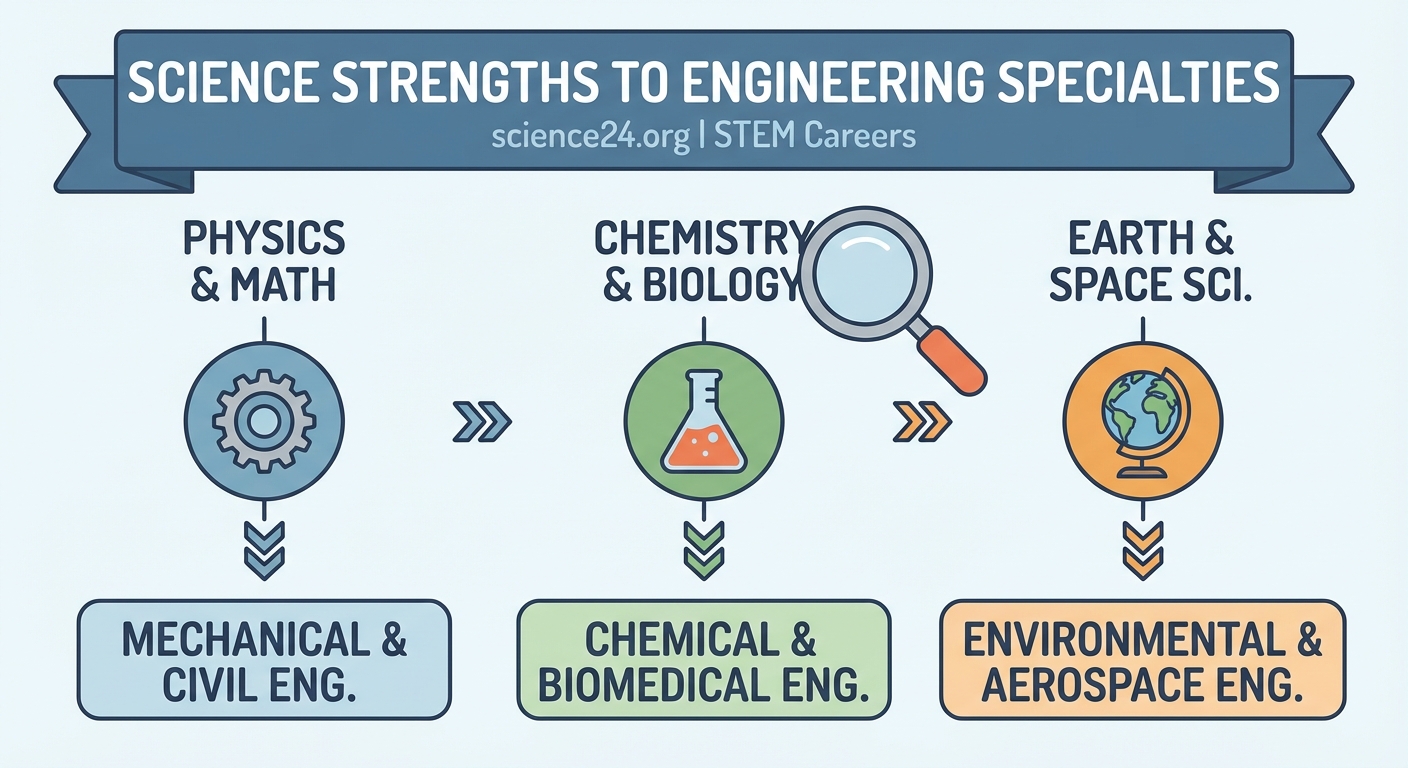
Stop guessing. Use this systematic approach to identify your best fit.
- List your three highest science and math grades from the past two years.
- Write down which homework you finish fastest without checking answers constantly.
- Identify which lab activities or problem sets you actually enjoyed, not just tolerated.
- Note whether you prefer building physical things, writing code, analyzing data, or designing systems.
- Research which engineering programs require your strongest subjects as core courses.
This process reveals patterns. A student who aces physics but struggles with balancing chemical equations should probably avoid chemical engineering.
Math Skills That Point Toward Specific Engineering Majors
Your comfort with different math topics also signals good fits.
Calculus and Differential Equations
Every engineering major uses calculus. But some programs need more advanced math than others.
Electrical and computer engineering require heavy differential equations and complex numbers. If imaginary numbers make sense to you, these fields might fit.
Aerospace and mechanical engineering use calculus for dynamics and fluid flow.
Civil engineering applies calculus but often focuses more on statics and practical calculations.
Statistics and Probability
Industrial engineering relies heavily on statistics for quality control and process optimization.
Environmental engineering uses statistics to analyze pollution data and model ecosystems.
Biomedical engineering applies statistics to clinical trials and medical data.
Geometry and Spatial Reasoning
If you can visualize 3D objects easily, mechanical, civil, and aerospace engineering play to that strength.
Computer-aided design (CAD) software becomes intuitive when you naturally think in three dimensions.
Comparing Engineering Specializations by Core Requirements
This table shows which science and math subjects matter most for common engineering majors.
| Engineering Major | Primary Science | Secondary Science | Critical Math Beyond Calculus |
|---|---|---|---|
| Mechanical | Physics | Materials Science | Differential Equations |
| Electrical | Physics | Math | Complex Analysis, Linear Algebra |
| Chemical | Chemistry | Physics | Differential Equations, Statistics |
| Civil | Physics | Environmental Science | Statics, Structural Analysis |
| Biomedical | Biology | Chemistry | Statistics, Modeling |
| Computer | Math | Physics | Discrete Math, Algorithms |
| Industrial | Statistics | Business | Operations Research, Optimization |
| Environmental | Chemistry | Biology | Statistics, Modeling |
Common Mistakes When Choosing an Engineering Major
Avoid these traps that lead to major changes and extra semesters.
Picking based on salary alone. High starting salaries mean nothing if you hate the daily work. A petroleum engineer who dislikes chemistry will burn out fast.
Ignoring your weakest subjects. If chemistry labs make you anxious, chemical engineering will amplify that stress for four years.
Following friends or family pressure. Your parent’s engineering major might not match your brain’s wiring.
Choosing “general engineering” to delay the decision. Most schools require you to pick a specialization by sophomore year anyway. Starting in the right program saves time.
Assuming all engineering is the same. A computer engineering student rarely takes the same classes as a civil engineering student after freshman year.
How to Test Your Interest Before Committing
You don’t need to declare a major blind. Try these approaches first.
- Shadow a practicing engineer in fields you’re considering
- Take introductory courses in multiple engineering departments if your school allows
- Join engineering student organizations to meet upperclassmen in different majors
- Complete summer programs or online courses in specific engineering topics
- Build personal projects that mirror real engineering work
A high school student interested in electrical engineering can learn basic circuit problem-solving before applying to programs.
Someone considering biomedical engineering might volunteer at a hospital to see medical devices in use.
What to Do If You’re Strong in Multiple Sciences
Some students excel in physics, chemistry, and biology equally. That’s actually an advantage.
Look at interdisciplinary programs that combine fields:
- Materials Science and Engineering blends physics and chemistry to design new substances
- Biochemical Engineering combines biology and chemistry for pharmaceutical and biotech applications
- Mechatronics merges mechanical, electrical, and computer engineering
- Engineering Physics offers flexibility to specialize later while building strong fundamentals
These programs often lead to careers that don’t require a PhD but still pay well and offer interesting work.
Skills Beyond Science That Matter for Engineering Success
Technical knowledge isn’t everything. Certain soft skills predict success in specific engineering fields.
Communication and Teamwork
Civil and environmental engineers work with government agencies, community groups, and construction teams constantly.
Biomedical engineers collaborate with doctors, nurses, and patients.
If you prefer working alone, computer or electrical engineering offers more solo work opportunities.
Creativity vs. Optimization
Some engineering roles emphasize innovation and new designs. Others focus on improving existing systems.
Mechanical and aerospace engineers often design new products from scratch.
Industrial engineers typically optimize processes that already exist.
Know which approach energizes you.
Hands-On Work vs. Computer Modeling
Mechanical and civil engineers still spend significant time on construction sites and in fabrication shops.
Electrical and computer engineers work primarily with software and circuit boards.
Chemical engineers split time between computer simulations and plant operations.
Making the Final Decision With Confidence
After reviewing your science strengths, math comfort, and work preferences, narrow your choices to two or three programs.
Contact current students in those majors. Ask specific questions:
- What does a typical week of homework look like?
- Which freshman course weeds out the most students?
- What internships do people in this major actually get?
- Do you wish you’d chosen a different engineering specialization?
Visit campus if possible and sit in on a sophomore-level engineering course in each major you’re considering. Freshman intro classes don’t reveal much. The second-year courses show what you’ll actually study.
Trust your gut after gathering data. If a major’s coursework sounds tedious even though it pays well, you won’t be happy.
Building Your Skills Now for Any Engineering Path
Regardless of which specialization you choose, certain preparations help every engineering student.
- Get comfortable with solving quadratic equations since they appear everywhere in engineering
- Practice converting word problems into equations because engineering is applied math
- Avoid common algebra mistakes that slow you down on exams
- Learn to manage time effectively using strategies that work for technical subjects
Strong fundamentals in math and science give you flexibility to switch specializations early if needed.
Your Academic Strengths Already Know the Answer
Your transcript tells a story about which engineering specialization is right for me. The classes where you earned top grades without excessive struggle reveal your natural aptitudes.
A student who finishes physics homework in half the time it takes to complete chemistry labs should seriously consider mechanical or aerospace engineering. Someone who loves organic chemistry functional groups but finds physics tedious will probably thrive in chemical engineering.
Stop second-guessing your strengths. Pick the engineering major that builds on what you already do well, and you’ll spend four years getting better at things you actually enjoy rather than constantly catching up in subjects that drain you.