Your body runs on a constant supply of energy. You breathe, walk, think, and digest food without consciously managing any of it. Behind every heartbeat and every muscle contraction lies a single molecule doing most of the heavy lifting. That molecule is ATP, and without it, life as we know it would grind to a halt within seconds.
Cells need ATP because it provides readily available energy for essential processes like muscle contraction, protein synthesis, active transport, and cell signaling. ATP stores energy in high-energy phosphate bonds that release power when broken. Every cell continuously produces and consumes ATP to maintain life, making it the universal energy currency of biology.
What ATP Actually Is
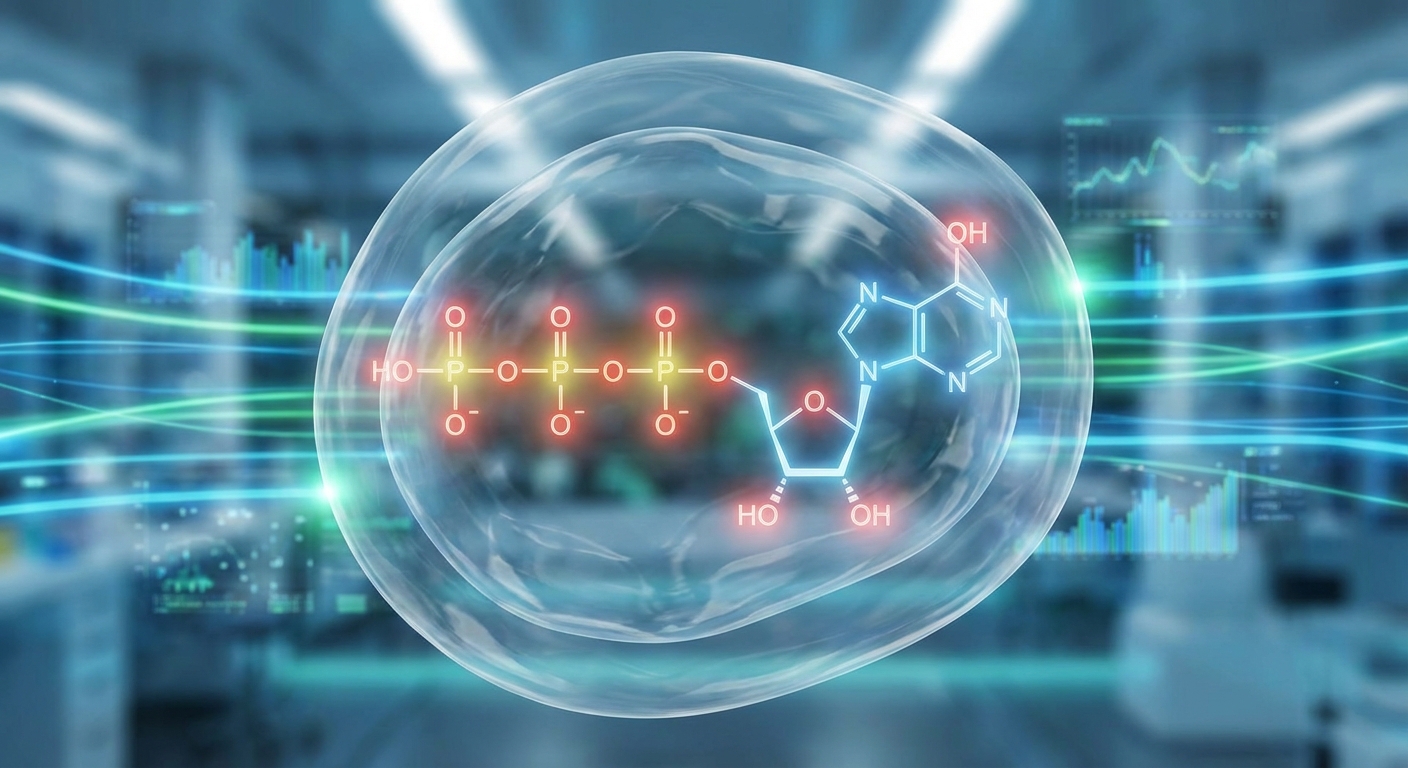
ATP stands for adenosine triphosphate. The name tells you exactly what it contains.
An adenine base sits at one end. A ribose sugar connects in the middle. Three phosphate groups chain together at the other end.
Those three phosphates matter most. The bonds between them store energy. When a cell breaks the bond between the second and third phosphate, energy releases instantly.
This reaction converts ATP into ADP (adenosine diphosphate) plus a free phosphate group. The energy released powers whatever the cell needs at that moment.
Think of ATP like a rechargeable battery. Cells charge it up during metabolism, use it for work, then recharge it again. This cycle happens trillions of times every day in your body.
The Core Reasons Cells Depend on ATP
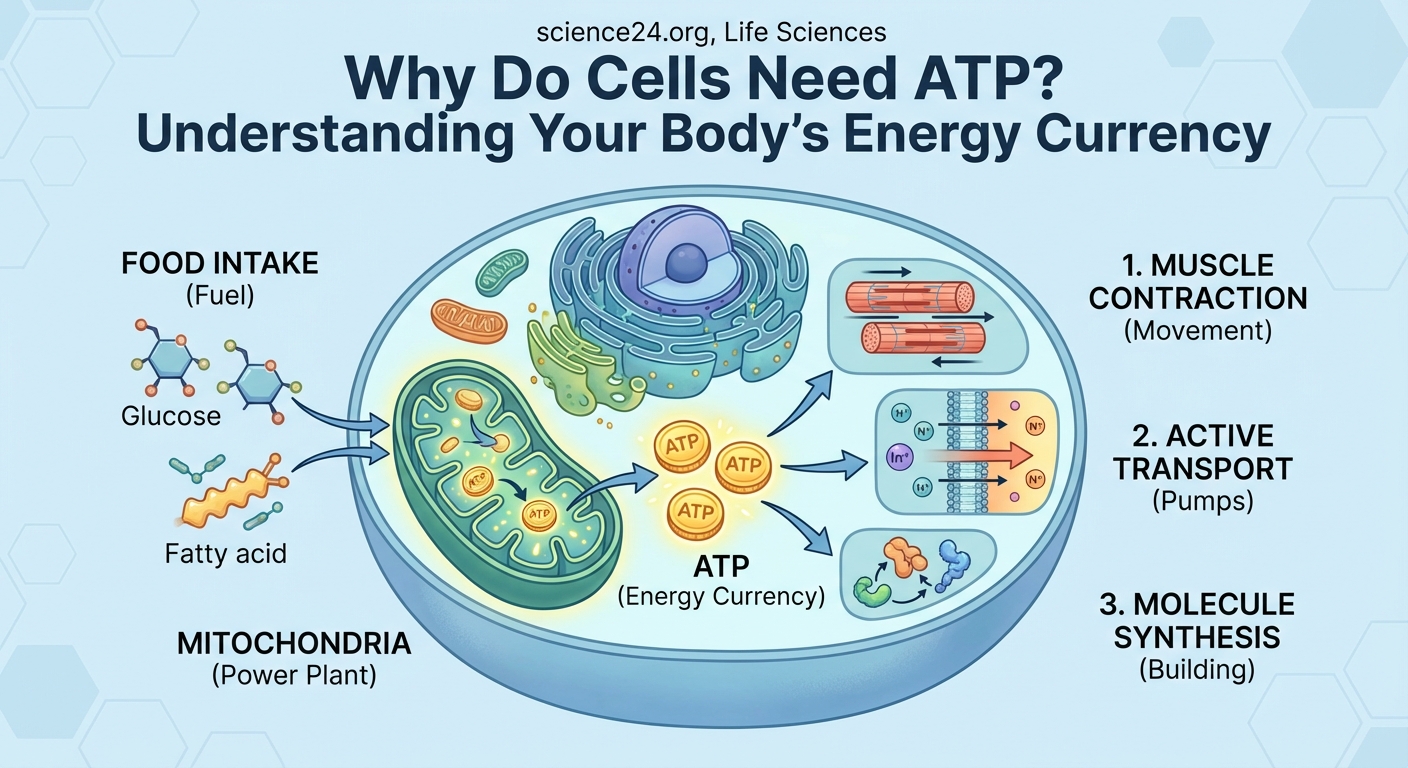
Cells need ATP for four fundamental categories of work. Each one keeps you alive.
Movement and Mechanical Work
Muscles contract because ATP powers the sliding of protein filaments past each other. Without ATP, your heart would stop beating. Your diaphragm would freeze. You could not blink or swallow.
Motor proteins inside cells also depend on ATP. These molecular machines haul cargo along microscopic tracks, moving vesicles, organelles, and chromosomes where they need to go.
Even single-celled organisms use ATP to power flagella and cilia for swimming.
Building Molecules
Cells constantly build new proteins, DNA, RNA, lipids, and carbohydrates. These synthesis reactions require energy input.
ATP provides that energy by coupling unfavorable reactions with favorable ones. When ATP breaks down, it releases enough energy to drive the formation of chemical bonds that would not form spontaneously.
For example, linking amino acids into proteins costs energy. Cells use ATP to make it happen. The same applies to copying DNA during cell division, which is crucial for processes like what happens during mitosis.
Active Transport Across Membranes
Cells maintain strict control over what enters and exits. Many molecules must move against their concentration gradient, from low concentration to high.
This uphill movement requires energy. Sodium-potassium pumps, for instance, use ATP to maintain the electrical charge across nerve cell membranes. Every nerve impulse depends on this pump.
Cells also use ATP to import nutrients, export waste, and regulate pH. Without active transport, cells would lose their internal organization and die.
Signaling and Communication
Cells talk to each other through chemical signals. Producing, releasing, and responding to these signals costs energy.
ATP powers the synthesis of signaling molecules. It also drives the conformational changes in receptor proteins that trigger cellular responses.
Some cells even release ATP itself as a signaling molecule, adding another layer to its importance.
How Cells Make ATP
Cells produce ATP through two main pathways. Both extract energy from food molecules.
1. Cellular Respiration
This oxygen-dependent process happens in mitochondria. It generates the vast majority of ATP in your cells.
Glucose enters the cell and gets broken down through glycolysis in the cytoplasm. This produces a small amount of ATP and sends molecules called pyruvate into the mitochondria.
Inside the mitochondria, the citric acid cycle (also called the Krebs cycle) extracts high-energy electrons from pyruvate. These electrons pass through the electron transport chain, creating a proton gradient across the inner mitochondrial membrane.
The gradient drives ATP synthase, a molecular turbine that produces ATP from ADP and phosphate. This process, called oxidative phosphorylation, generates about 30-32 ATP molecules per glucose molecule.
The entire process mirrors how photosynthesis actually works, but in reverse. Plants capture light energy to build glucose. Animals break glucose down to release that stored energy.
2. Fermentation
When oxygen runs low, cells switch to fermentation. This pathway produces ATP without oxygen but generates far less energy.
During intense exercise, your muscle cells use fermentation to keep producing ATP when oxygen delivery cannot keep up with demand. The tradeoff is lactic acid buildup, which causes that burning sensation.
Yeast cells use fermentation to produce alcohol and carbon dioxide, which is why bread rises and beer ferments.
The ATP Cycle Never Stops
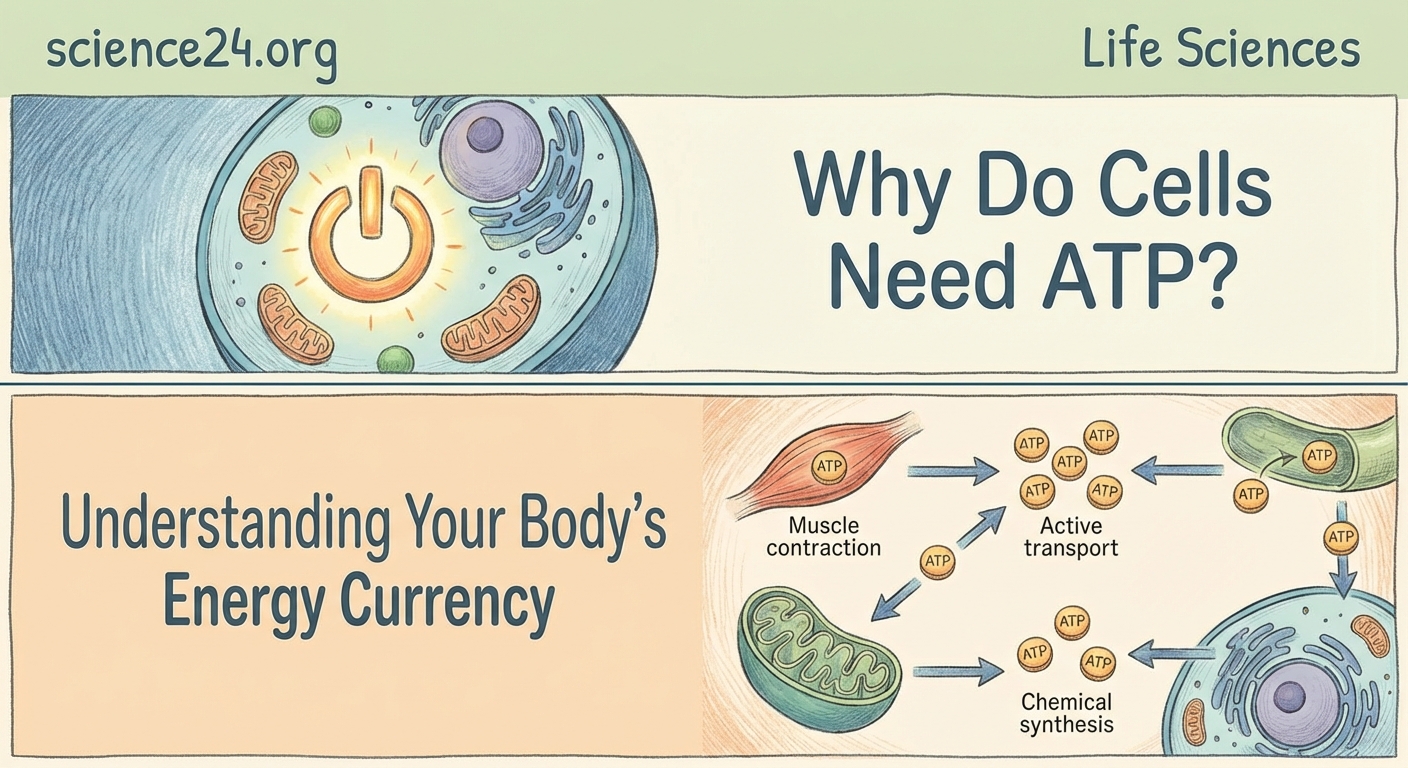
Your cells maintain a constant pool of ATP. The average human body contains only about 250 grams of ATP at any moment, yet you produce and consume roughly your entire body weight in ATP every single day.
This rapid turnover happens because cells store very little ATP. Instead, they produce it on demand.
A resting muscle cell might turn over its ATP pool every few minutes. An active muscle cell during sprinting might cycle through it in seconds.
The cycle looks like this:
- Cells break down glucose, fats, or proteins through metabolism
- Energy from those molecules drives ATP synthesis
- ATP gets used immediately for cellular work
- ADP and phosphate return to mitochondria for recharging
- The cycle repeats continuously
Common Misconceptions About ATP
Students often misunderstand several aspects of ATP. Clearing these up helps build a solid foundation.
| Misconception | Reality |
|---|---|
| ATP is stored for long periods | ATP is used within seconds of production |
| Only muscle cells need ATP | Every living cell requires ATP constantly |
| ATP contains a lot of energy | ATP stores moderate energy but releases it instantly |
| Cells make ATP only when active | Cells produce ATP continuously, even at rest |
| ATP is the only energy molecule | Cells also use GTP, NADH, and other energy carriers |
Why ATP Works So Well as Energy Currency
Cells could theoretically use other molecules for energy transfer. So why did evolution settle on ATP?
ATP hits a sweet spot. The energy released when it breaks down is neither too large nor too small. It is just right for most cellular reactions.
If the energy release were too large, it would be wasteful. Too small, and cells would need to break down multiple molecules per reaction.
ATP also transfers energy efficiently. The molecule is stable enough to exist in the cell but reactive enough to participate in thousands of different reactions.
Its structure allows enzymes to recognize it easily. Nearly every enzyme that needs energy has an ATP binding site.
“ATP is the perfect compromise between stability and reactivity. It stores enough energy to be useful but releases it in manageable chunks that cells can control precisely.”
Different Cell Types Have Different ATP Needs
Not all cells consume ATP at the same rate. Energy demands vary wildly based on cell function.
High ATP consumers include:
- Muscle cells during contraction
- Nerve cells transmitting signals
- Kidney cells filtering blood
- Liver cells synthesizing proteins
- Sperm cells swimming toward eggs
Lower ATP consumers include:
- Fat storage cells (adipocytes)
- Bone cells (osteocytes)
- Cartilage cells (chondrocytes)
- Red blood cells (which lack mitochondria)
Cells that work harder contain more mitochondria. A single liver cell might have 1,000 to 2,000 mitochondria. A fat cell might have only a few hundred.
Heart muscle cells pack mitochondria so densely that they occupy about 30% of cell volume. The heart never stops working, so it needs constant ATP production.
What Happens When ATP Production Fails
Cells die rapidly without ATP. The effects cascade through multiple systems.
Muscles cannot contract. The heart stops. Brain cells lose function within minutes. Active transport pumps fail, allowing ions to leak across membranes.
Certain poisons work by blocking ATP production. Cyanide, for example, shuts down the electron transport chain. Without it, cells cannot make ATP through cellular respiration.
Genetic diseases can also impair ATP production. Mitochondrial disorders reduce the efficiency of cellular respiration, causing muscle weakness, neurological problems, and organ failure.
Even temporary ATP depletion causes problems. During a heart attack, blocked blood flow starves heart muscle of oxygen. Without oxygen, cells cannot run cellular respiration efficiently. ATP levels drop. Heart muscle cells begin dying within 30 minutes.
ATP Beyond Basic Energy Transfer
ATP does more than just power reactions. It also serves regulatory functions.
Cells use ATP levels as a signal of energy status. When ATP is abundant, cells know they have enough energy and can invest in growth and division.
When ATP drops, cells activate energy-saving measures. They slow down protein synthesis, reduce active transport, and ramp up glucose breakdown.
Some enzymes change activity based on ATP concentration. This allows cells to adjust metabolism automatically based on energy availability.
ATP also plays structural roles. It helps proteins fold correctly. It stabilizes certain molecular complexes. It even contributes to DNA and RNA structure, since both molecules contain adenine bases similar to ATP.
How Diet and Nutrients Support ATP Production
Your body makes ATP from the food you eat. Different nutrients contribute in different ways.
Carbohydrates provide the quickest ATP source. Glucose breaks down easily through glycolysis and cellular respiration.
Fats store more energy per gram but take longer to convert to ATP. During rest and low-intensity activity, your cells prefer burning fat.
Proteins can be converted to ATP when necessary, but cells prefer to save proteins for building and repair.
B vitamins play crucial roles in ATP production. They act as coenzymes in the chemical reactions that extract energy from food. Deficiencies in B vitamins can impair ATP synthesis and cause fatigue.
Minerals like magnesium also matter. ATP actually exists in cells as a complex with magnesium ions. Without adequate magnesium, ATP cannot function properly.
Understanding these connections helps explain why balanced nutrition matters for energy levels, much like what makes enzymes such powerful biological catalysts depends on having the right conditions.
Studying ATP for Exams
When preparing for biology exams, focus on these key ATP concepts:
- Structure: Memorize the three components (adenine, ribose, three phosphates)
- Function: Know the four main categories of cellular work ATP powers
- Production: Understand cellular respiration stages and ATP yield
- Cycle: Recognize that ATP is continuously produced and consumed
- Importance: Explain why cells need constant ATP rather than storing it
Practice drawing the ATP cycle. Sketch how glucose becomes ATP through glycolysis, the citric acid cycle, and the electron transport chain.
Make flashcards for ATP-dependent processes. Quiz yourself on which cellular activities require ATP and why.
Work through practice problems calculating ATP yield from different molecules. Understand why fats produce more ATP per gram than carbohydrates.
Your Cells Are Working Right Now
While you read this sentence, your cells are producing and consuming millions of ATP molecules every second. Your neurons are firing. Your heart is beating. Your muscles are holding you upright. Every single action requires ATP.
The next time you stand up, remember that ATP powers the muscle contractions that lift you. When you think through a difficult problem, ATP fuels the electrical signals racing through your brain. When you digest your next meal, ATP drives the pumps and enzymes that break down food and absorb nutrients.
Understanding why cells need ATP gives you insight into the fundamental chemistry of life itself. Every organism on Earth, from bacteria to blue whales, depends on this single molecule to survive. That shared dependence connects all living things through billions of years of evolution.
Leave a Reply