Organic chemistry can feel overwhelming at first. Reactions, mechanisms, and reagents seem like a foreign language. However, with the right approach, you can make mastering organic chemistry reactions a natural process. Instead of rote memorization, focus on understanding the why and how behind each reaction. This way, you’ll develop a deeper intuition and confidence to tackle exams and beyond.
Mastering organic chemistry reactions involves understanding mechanisms, practicing regularly, and building mental maps. Focus on core concepts and patterns to make reactions second nature and succeed naturally in exams and real-world applications.
How to Approach Organic Chemistry Reactions Effectively
Learning organic chemistry reactions is like learning a new language. The key is to understand the grammar — the mechanisms — rather than just memorize vocabulary. Here’s a step-by-step plan to help you master reactions naturally.
1. Focus on Reaction Mechanisms First
Understanding the why behind reactions makes memorization unnecessary. Mechanisms explain the movement of electrons, the formation and breaking of bonds, and the role of reagents. When you grasp these concepts, reactions become logical steps rather than random events.
Practical process:
- Study each reaction’s mechanism breakdown. Use visual aids like arrow-pushing diagrams.
- Connect similar mechanisms across different reactions to see patterns.
- Practice drawing mechanisms from scratch without looking at notes.
Tip: Use resources like reaction maps or detailed tutorials from sites such as science24.org to reinforce your understanding of reaction pathways.
2. Recognize Patterns and Group Similar Reactions
Many reactions in organic chemistry follow similar patterns. Recognizing these reduces the amount of new information to memorize.
Scanning list of common patterns:
- Nucleophilic substitutions (SN1, SN2)
- Elimination reactions (E1, E2)
- Addition reactions to alkenes and alkynes
- Oxidation and reduction processes
- Rearrangements and resonance stabilization
Technique: Create a mental or physical chart linking reactions with their mechanisms and typical reagents. Over time, this pattern recognition makes reactions feel intuitive.
3. Practice with Real-World Problems and Reaction Maps
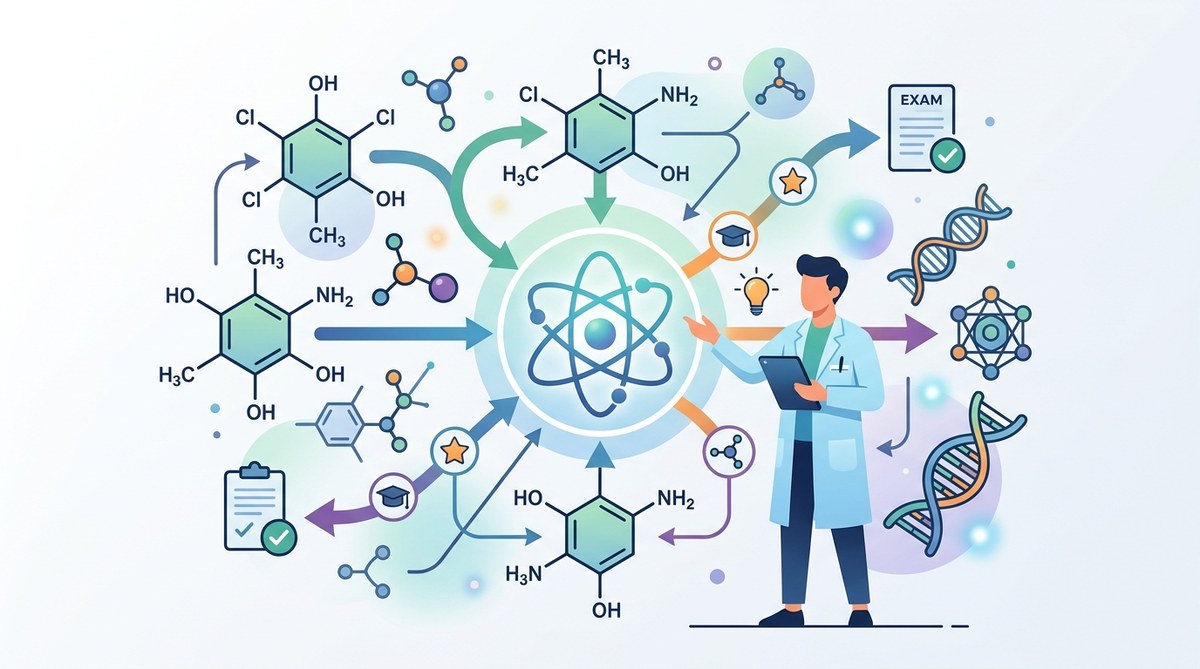
Applying your knowledge to practice problems cements your understanding. Use reaction maps to visualize multiple pathways and outcomes.
How to practice effectively:
- Solve end-of-chapter questions from textbooks or online resources.
- Use reaction flowcharts to predict products of unknown reactions.
- Regularly revisit challenging reactions to reinforce memory.
Expert tip: As one chemistry professor emphasizes, “Repeatedly working through reactions in context makes them part of your thinking process, not just memorized steps.”
4. Build Your Reaction Vocabulary
While understanding mechanisms is crucial, knowing reagents and conditions helps you identify reactions quickly.
Strategies:
- Use flashcards for common reagents and their roles.
- Create mnemonics for complex reagents or steps.
- Relate reagents to the mechanism they facilitate.
Mistake to avoid: Relying solely on memorization without understanding the function of each reagent can lead to confusion when conditions change.
5. Use Study Aids and Interactive Resources
Interactive tutorials, reaction maps, and quizzes can make studying more engaging and effective.
Useful tools:
- Online reaction encyclopedias like science24.org
- Practice quizzes to test your recognition of mechanisms
- Video tutorials that walk through reactions step-by-step
Tip: Incorporate active recall into your study routine. Instead of passively reading, test yourself by predicting reactions before checking the solution.
Common Techniques and Mistakes in Organic Reactions
Knowing effective techniques and pitfalls helps you study smarter.
| Technique | Mistake to Avoid |
|---|---|
| Visualize electron movement with arrow-pushing | Memorizing reactions without understanding electron flow |
| Connect new reactions to familiar patterns | Ignoring the underlying mechanism, leading to rote learning |
| Practice drawing mechanisms from memory | Relying only on reading reaction formulas |
| Use reaction flowcharts and maps | Overloading your memory with isolated reactions |
| Revisit challenging reactions regularly | Doing one-off practice without review |
Expert Advice on Making Reactions Second Nature
“The secret to mastering organic chemistry reactions naturally is to see them as part of a bigger story, not isolated events. Focus on understanding the mechanisms, look for patterns, and practice consistently.” — Organic chemistry professor
How to Make Study Sessions More Effective
- Break down reactions into smaller steps.
- Create mnemonics for reagents and conditions.
- Teach the concepts to a study buddy or record yourself explaining reactions.
- Use color coding to differentiate between nucleophiles, electrophiles, and leaving groups.
- Simulate exam conditions with timed practice.
Overcoming Common Challenges
Many students struggle with reaction mechanisms because they try to memorize steps without understanding. To avoid this:
- Focus on electron flow rather than just memorizing reagents.
- Visualize each step as a dance of electrons.
- Relate reactions back to basic principles like acidity, basicity, and resonance.
In addition, keep in mind that mistakes are part of learning. Review errors to understand where your reasoning faltered and how to correct it.
The Power of Pattern Recognition and Practice
Reactions often repeat in different contexts. Recognizing these patterns reduces the mental load and boosts confidence.
- Example: Both SN2 and E2 reactions involve β-elimination, but differ in conditions and outcomes. Understanding their mechanisms helps you predict and identify them quickly.
Regular practice using reaction maps and problem sets is the best way to internalize these patterns.
Final Thoughts on Mastering Organic Reactions Naturally
Building a deep understanding of mechanisms transforms learning from memorization into an intuitive process. Focus on visualizing electron movements, recognizing patterns, and practicing actively. Over time, reactions become second nature, and your confidence will grow.
Keep revisiting challenging reactions, relate new concepts to familiar ones, and test yourself frequently. With persistence, organic chemistry will no longer be a series of daunting steps but a logical, interconnected web of reactions you can navigate effortlessly.
Good luck on your journey to mastering organic chemistry reactions naturally. Approach your studies with curiosity and patience, and you’ll find yourself learning faster and retaining more.