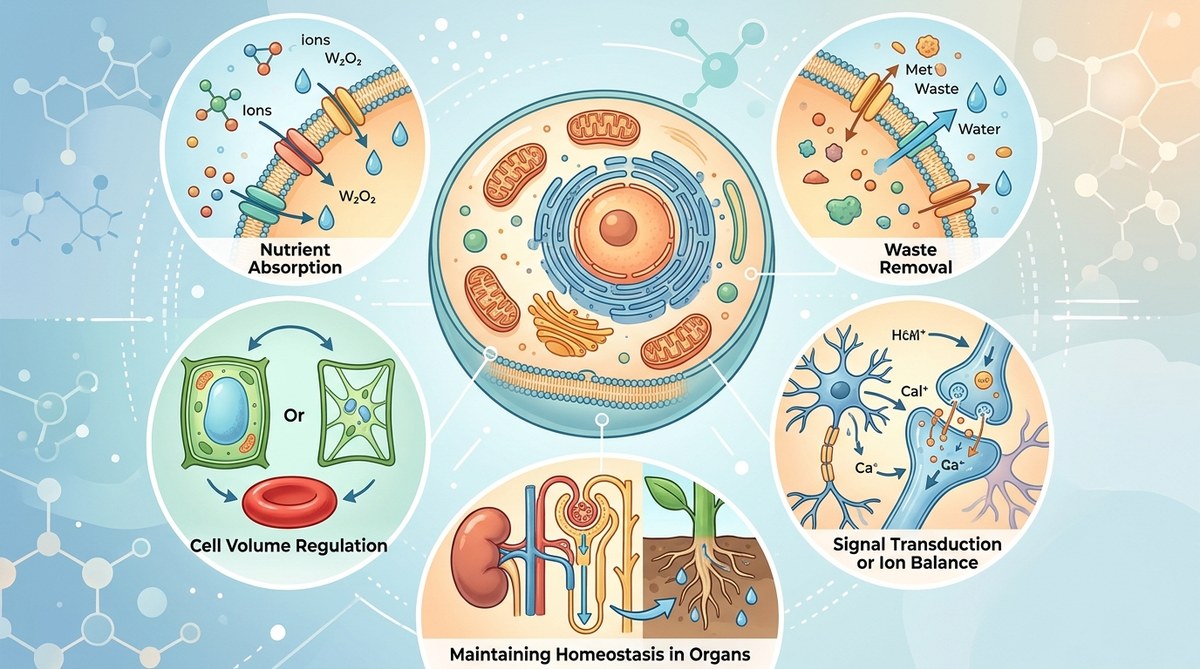
Your cells are water managers. Every second of every day, they shift water across their membranes to stay balanced, get nutrients, and remove waste. This process is called osmosis. You probably learned the textbook definition: water moves from a place of high concentration to a place of low concentration through a semipermeable membrane. But that clean sentence hides a lot of messy, fascinating biology. Osmosis is not just a lab demo with a potato and salt. It is a survival tool your cells use in ways that might surprise you.
Osmosis in cells goes far beyond simple water movement. Your red blood cells use it to keep their shape, plant roots rely on it to pull water upward, and your kidneys filter waste using osmotic pressure. Even your gut bacteria depend on it. Understanding these real world osmosis examples in cells helps you see why water balance is critical for life at every level.
How Plant Roots Use Osmosis to Drink Against Gravity
Plants face a serious challenge. They need to pull water from the soil, which sits below them, all the way up to their leaves. That is a lot of height to overcome. No pump exists inside a plant. So how does water make the climb?
Root hair cells are the key. Each root hair is a single cell with a thin wall and a large surface area. These cells have a higher concentration of dissolved minerals inside them than the surrounding soil does. Because of osmosis, water from the soil naturally moves into the root hair cell. This movement creates pressure inside the root. As more water enters, the pressure pushes water into the next cell over, and then the next, in a chain reaction.
This process is called root pressure. It is a direct result of osmosis examples in cells working together. At night, when evaporation from leaves is low, you can sometimes see root pressure in action. Small droplets of water form on the tips of grass blades. That is water pushed out by the roots. In 2026, researchers at the University of California are still studying how root pressure interacts with other forces to help plants survive drought.
Red Blood Cells and the Shape of Survival
Your red blood cells need a very specific shape. They look like tiny donuts with a dip in the center. This shape gives them flexibility to squeeze through narrow capillaries. Osmosis is what maintains that shape.
Red blood cells float in blood plasma. Plasma has a specific salt concentration. If the plasma becomes too dilute, water rushes into the red blood cells. They swell up and can burst. This is called hemolysis. If the plasma becomes too salty, water leaves the red blood cells. They shrink and become spiky. This is called crenation.
Your body works hard to keep plasma at the right concentration. Your kidneys adjust how much water you retain or release. This is why hydration matters so much for athletes. Drink too much plain water without electrolytes, and your blood plasma becomes too dilute. Your red blood cells start to swell. That is one of the reasons sports drinks contain salts. They help maintain the osmotic balance your cells need.
How Your Kidneys Use Osmosis to Filter Waste
Your kidneys are master filters. Every day, they process about 50 gallons of blood plasma. They remove waste while keeping valuable molecules like glucose and proteins. Osmosis is a central part of this process.
Inside each kidney, tiny structures called nephrons handle the filtering. Blood enters a nephron under high pressure. Water and small molecules are forced out into a tubule. Then the real work begins. As the fluid moves through the tubule, the cells lining it actively pump out salts. This creates a high salt concentration in the surrounding tissue. Water follows by osmosis, moving out of the tubule and back into the blood.
This is one of the most elegant osmosis examples in cells. The kidney cells create a salt gradient, and osmosis does the rest. The result is concentrated urine. If you are dehydrated, your kidneys make the salt gradient even steeper. More water is pulled out, and your urine becomes darker. If you are well hydrated, the gradient is less steep, and more water stays in the urine.
Here is a breakdown of the three main steps in kidney filtration:
- Filtration. Blood pressure pushes water and small molecules into the nephron tubule.
- Reabsorption. Salts are pumped out of the tubule, creating a high salt environment outside.
- Osmosis. Water follows the salt gradient, moving out of the tubule and back into the blood.
White Blood Cells and the Osmotic Chase
White blood cells hunt down bacteria. When they find one, they need to engulf it. This process is called phagocytosis. But there is an osmotic trick happening behind the scenes.
When a white blood cell detects a bacterium, it extends its membrane around the invader. To do this, the cell needs to change its shape. Shape changes require water to move inside the cell. The white blood cell uses local osmosis. It pumps ions into specific areas of its cytoplasm. Water follows those ions, causing the membrane to bulge outward. This bulge wraps around the bacterium.
Without osmosis, white blood cells could not change shape. They would be rigid and unable to trap bacteria. This is a surprising example of osmosis in cells that connects directly to your immune system. Next time you fight off a cold, remember that osmosis is helping your white blood cells catch the enemy.
Gut Bacteria and the Water Balance in Your Intestines
Your gut is home to trillions of bacteria. They help you digest food and support your immune system. But they also affect the water balance in your intestines. This is a lesser known example of osmosis in cells that can have big consequences.
Bacteria in your gut produce substances that can attract water. Some of these substances are short chain fatty acids. When these molecules are present, they create a higher concentration of solutes inside your intestinal tract. Water moves in by osmosis. This is normal and helps keep your stool soft.
But sometimes things go wrong. If you eat something that causes an overgrowth of certain bacteria, they can produce too many of these osmotic substances. Too much water is pulled into the intestines. That is one cause of diarrhea. On the other hand, if you do not have enough fiber feeding your gut bacteria, they produce fewer osmotic substances. Less water stays in the intestines, and you can become constipated.
| Situation | Bacterial Activity | Osmotic Effect | Result |
|---|---|---|---|
| Healthy diet with fiber | Balanced production of fatty acids | Moderate water pulled into gut | Normal stool |
| High sugar or infection | Overgrowth of certain bacteria | Excess water pulled into gut | Diarrhea |
| Low fiber diet | Reduced bacterial activity | Less water pulled into gut | Constipation |
This table shows how osmosis examples in cells of gut bacteria directly affect your daily comfort. Keeping your gut bacteria happy with a balanced diet helps maintain proper osmotic balance.
The Special Case of Plant Cell Walls
Plant cells have something animal cells do not: a rigid cell wall. This changes how osmosis affects them. When a plant cell takes in water by osmosis, it expands. But the cell wall prevents it from bursting. Instead, the cell becomes turgid. It pushes against the wall, creating internal pressure.
This turgor pressure is what keeps plants upright. A wilted plant has lost water from its cells. The cells are no longer turgid. They are flaccid. The plant droops. When you water the plant, water moves back into the cells by osmosis. Turgor pressure returns, and the plant stands tall again.
“Turgor pressure is one of the most visible signs of osmosis in cells. You can see it happen in real time. A wilted houseplant can recover within hours after watering because water moves back into the cells and restores pressure.” This observation comes from plant physiologist Dr. Maria Chen, who studies how crops respond to drought stress at the University of Arizona.
This is also why salty soil is bad for plants. If the soil has a higher salt concentration than the root cells, water leaves the roots by osmosis. The plant cannot maintain turgor pressure. It wilts even if the soil is wet.
Common Mistakes Students Make About Osmosis in Cells
Students often mix up osmosis with simple diffusion. They are related but not the same. Here is a table that clears up the confusion.
| Concept | What Moves | Membrane Requirement | Energy Needed |
|---|---|---|---|
| Simple diffusion | Any molecule (oxygen, carbon dioxide) | No membrane needed | No |
| Osmosis | Water only | Semipermeable membrane required | No |
| Active transport | Ions or large molecules | Membrane required | Yes (ATP) |
Another common mistake is thinking that water moves to dilute the solution. Water moves to equalize concentration. It does not care about dilution. It just follows the concentration gradient of water itself. If a cell has more solutes inside, the water concentration inside is lower. Water moves in to balance things out.
A third mistake is assuming osmosis only happens in plant cells. Osmosis examples in cells occur in every living cell. Bacteria, fungi, animal cells, and plant cells all use osmosis. The difference is how they handle the pressure. Animal cells lack cell walls, so they risk bursting. Plant cells have walls, so they build turgor pressure.
Putting Osmosis to Use in Your Own Life
You can apply what you know about osmosis examples in cells to everyday situations. Here are a few practical tips:
- Rehydrate smart. After exercise, drink water with electrolytes. Plain water dilutes your blood plasma too much. Electrolytes help maintain the right osmotic balance for your red blood cells.
- Water your plants correctly. Use water that is not too salty. Tap water is usually fine, but softened water can contain extra sodium that hurts root cells.
- Manage digestive health. Eat fiber to feed your gut bacteria. They help maintain the osmotic environment in your intestines that keeps your digestion regular.
- Avoid over hydrating. Drinking too much water too fast can cause a dangerous condition called hyponatremia. Your blood plasma becomes too dilute, and your cells swell. This is a serious risk for marathon runners.
If you want to understand more about how your cells manage energy and materials, check out our guide on why do cells need ATP. It connects directly to how cells use osmosis to power their daily functions.
Osmosis Is a Team Player
Osmosis rarely works alone. It teams up with other processes to keep cells running. For example, in your kidneys, active transport pumps out salt, and then osmosis follows. In plant roots, active transport loads minerals into cells, and then water follows by osmosis. In your white blood cells, ion pumps create local gradients that guide water movement for shape changes.
This teamwork is a theme across biology. No single process operates in isolation. Understanding osmosis examples in cells gives you a window into how cells coordinate multiple systems to survive. The movement of water is not just a passive event. It is a carefully managed resource.
If you are studying for a biology exam, remember that osmosis questions often test your understanding of direction. Water moves toward the higher solute concentration. That is the rule. Memorize it. Then apply it to different cell types. A plant cell in fresh water gains water. A red blood cell in salt water loses water. A kidney cell uses salt gradients to pull water out of urine. The rule is the same. The context changes.
For more help with exam prep, read our article on crushing your AP biology exam. It covers lab techniques that often involve osmosis experiments.
The Surprising Reach of Osmosis
Osmosis is not just a topic for biology class. It affects your daily life in ways you might not notice. The crispness of a salad depends on turgor pressure in plant cells. The way your eyes feel after a long day of screen time relates to osmotic balance in your tear film. Even the process of preserving food with salt or sugar relies on osmosis. Salt draws water out of bacteria cells, killing them.
In 2026, scientists are exploring how osmosis can be used in new technologies. Researchers at MIT are developing osmotic power generators that use the difference between fresh water and salt water to produce electricity. The same principle that moves water in your cells could one day power your home.
How Osmosis Connects to Other Cell Processes
Osmosis is tightly linked to cellular respiration and photosynthesis. When plant cells perform photosynthesis, they produce sugars. These sugars increase the solute concentration inside the cell. Water moves in by osmosis, which helps maintain turgor. In animal cells, cellular respiration produces carbon dioxide. That gas diffuses out, but the process also affects the cell’s internal environment and water balance.
If you want to go deeper, look at our guide on how photosynthesis actually works. It explains how plant cells manage water and sugar together.
A Final Look at Osmosis in Your Body
Your body is a system of osmotic checks and balances. Every cell membrane is a gatekeeper. Your blood vessels, your kidneys, your intestines, and your immune system all depend on water moving in the right direction at the right time. When that balance breaks, problems follow. Dehydration, swelling, kidney stones, and digestive issues all trace back to osmotic imbalances.
The best way to support your cells is to maintain a steady intake of water and electrolytes. Your body is good at regulating itself, but it needs the right raw materials. Drink when you are thirsty. Eat a balanced diet with fiber. Avoid extreme amounts of plain water without food. Your cells will thank you.
Osmosis examples in cells are everywhere once you start looking. From the roots of a tomato plant to the white blood cells fighting an infection, water movement is the silent workhorse of biology. Next time you see a droopy plant perk up after watering, you are watching osmosis in action. That is not just a textbook concept. That is your cells doing what they do best.