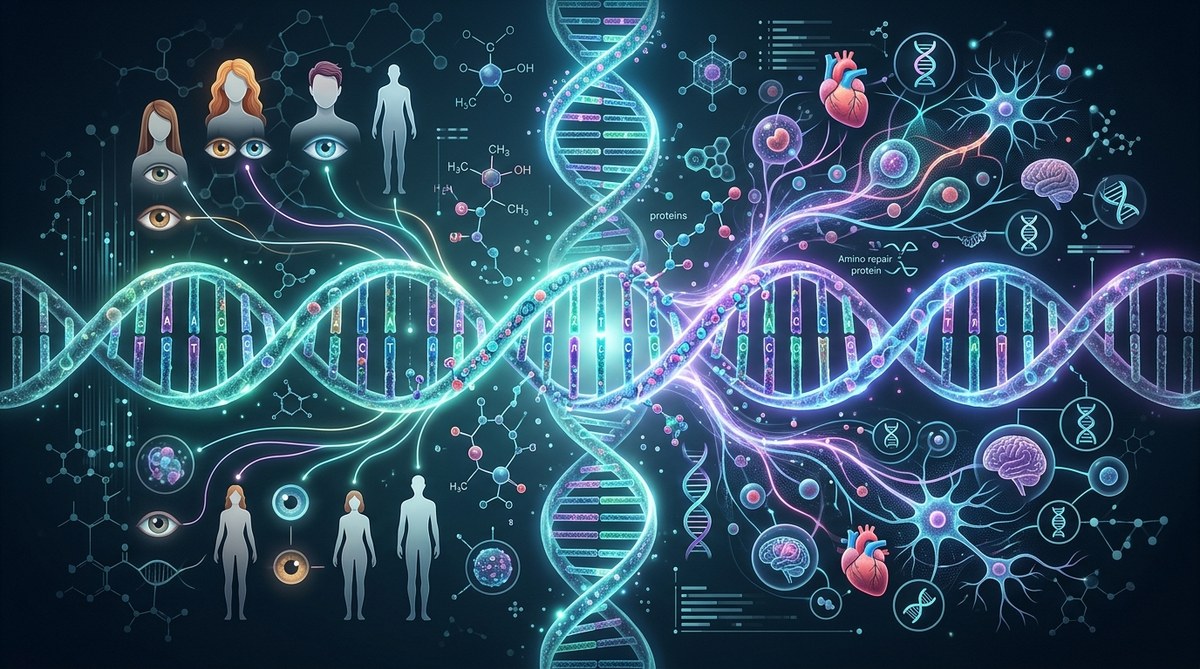
Humans are complex beings shaped by a vast network of genes that determine everything from eye color to susceptibility to certain diseases. Understanding how human genetics influence traits and health helps us appreciate our biological diversity and empowers us to make informed health decisions. This journey into the world of genes reveals the fascinating mechanisms behind heredity, variation, and the potential for personalized medicine.
Human genetics explains how our inherited genes influence physical traits and health. By understanding gene functions, variations, and how they are passed down, we gain insights into human diversity and medical advancements.
What is human genetics and why does it matter?
Human genetics is the study of genes and their role in human development, health, and traits. Every person inherits genetic material from their parents, which influences their physical features, behavior, and disease risks. This field has expanded rapidly with advances in DNA sequencing and genome analysis.
Knowing how genes work helps scientists develop treatments for genetic disorders, improve disease prediction, and customize healthcare plans. For students and researchers, understanding genetics opens doors to careers in medicine, research, and biotechnology. For health-conscious individuals, it provides tools to understand personal health risks and make lifestyle choices.
How genes shape human traits
Genes are segments of DNA that contain instructions for building proteins, which perform most functions in the body. The combination of genes inherited from parents creates our unique traits.
Basic concepts of genetics
- DNA: The molecule that carries genetic information.
- Gene: A segment of DNA that codes for a specific protein.
- Chromosome: A structure that organizes genes; humans have 23 pairs.
- Allele: Different versions of a gene, influencing trait variations.
- Genotype: The genetic makeup of an individual.
- Phenotype: The observable traits resulting from genes and environment.
How traits are inherited
Traits follow patterns of inheritance. Some are dominant, meaning only one copy of an allele is enough to express the trait. Others are recessive, requiring two copies. For example, brown eyes are often dominant over blue eyes.
To understand inheritance, many use Punnett squares, which predict the probability of traits in offspring. For instance, if one parent is heterozygous for a trait and the other is homozygous recessive, their children have a specific chance of inheriting that trait.
The role of genetic variation
Genetic variation arises from mutations, gene shuffling during reproduction, and other processes. Variations contribute to differences in physical features and disease susceptibility among individuals.
Practical process for understanding inheritance
- Identify the trait of interest.
- Determine the parents’ genotypes.
- Use Punnett squares to predict offspring traits.
- Consider environmental influences that may modify traits.
The science of genes and health
Genes influence health in several ways. Some variants increase the risk of diseases like cystic fibrosis or sickle cell anemia. Others affect how individuals respond to medications. Understanding these genetic influences helps in diagnosing and treating conditions more effectively.
Genetic testing and its benefits
Genetic testing analyzes DNA to identify mutations or variants linked to health risks. It can guide preventive measures and personalized treatments.
Common techniques in human genetics
| Technique | Purpose | Common Mistakes |
|---|---|---|
| DNA sequencing | Reading the genetic code | Misinterpreting sequence data |
| Polymerase chain reaction | Amplifying DNA samples | Contamination leading to errors |
| Genotyping | Identifying specific gene variants | Failing to account for environmental factors |
| Genome-wide association studies | Finding links between genes and traits | Overlooking population differences |
Expert advice
“Understanding your genetic makeup offers valuable insights into your health, but it is essential to interpret results with the guidance of professionals to avoid misconceptions.”
From genes to health outcomes
The relationship between genes and health is complex. Not every genetic variant causes disease; many influence traits subtly or interact with environmental factors. For example, someone may carry a gene associated with higher cholesterol but maintain healthy levels through diet and exercise.
How environment interacts with genetics
Environmental factors such as diet, stress, and exposure to toxins can modify gene expression. Epigenetics studies these changes, revealing how lifestyle choices impact genetic activity without altering DNA sequences.
The future of personalized medicine
Advancements in genomics are paving the way for treatments tailored to an individual’s genetic profile. Pharmacogenomics guides medication choices, reducing side effects and improving efficacy.
How to explore your own genetics
For those curious about their genetic makeup, several steps can be taken:
- Research available genetic tests suited to your interests or health concerns.
- Consult healthcare professionals or genetic counselors to interpret results.
- Adopt lifestyle changes based on your genetic risks and strengths.
Practical tips for integrating genetics into daily life
- Keep track of family health history.
- Stay informed about genetic research developments.
- Use genetic information responsibly, respecting privacy and ethical considerations.
Common pitfalls in studying genetics and traits
Misunderstandings often arise around genetic concepts. For example, believing that a single gene determines a trait oversimplifies the picture. Also, neglecting environmental influences can lead to false assumptions about heredity.
Techniques and mistakes table
| Technique | Mistake to avoid |
|---|---|
| Overgeneralizing gene effects | Assuming genes alone determine traits |
| Ignoring environmental factors | Overlooking lifestyle impacts |
| Misinterpreting genetic data | Confusing correlation with causation |
Practical tip
Always consider the broader context—genes interact with environment, lifestyle, and chance. Genetics provides part of the story but not the whole story.
The ongoing impact of genetics on society
Advances in human genetics are transforming medicine, agriculture, and forensics. As sequencing becomes more affordable, more individuals can learn about their genetic makeup, leading to personalized health strategies.
Research continues to uncover the genetic basis of complex traits like intelligence, behavior, and longevity. These discoveries raise ethical questions about privacy, genetic modification, and discrimination.
Embracing the potential of human genetics
Understanding our genetic foundation opens new horizons. It empowers us to prevent diseases, customize treatments, and appreciate the diversity that makes humanity unique. As you learn more about genetics, think about how this knowledge can serve your personal growth or scientific pursuits.
Whether you’re a student, educator, researcher, or health-conscious individual, exploring human genetics and traits enriches your perspective on what makes us human. Using science responsibly and ethically will ensure that these powerful insights benefit everyone.
Your genetics journey starts now
Take the time to explore your genetic background, ask questions, and stay informed about ongoing research. Remember, genetics is a tool that, when used wisely, can improve health outcomes and deepen our understanding of human nature. Embrace curiosity, and let your interest in genetics guide your path forward.